Moving Documents to Keep Together Before, During, and After a Move
Keep contracts, identification, inventories, confirmations, receipts, and essential records organized and accessible throughout a household move.
Plan your move with practical guidance for organizing the decisions and tasks that come before moving day.
Explore moving timelines, budgets, checklists, household inventories, moving methods, decluttering, documents, and other planning topics. Each guide focuses on a specific part of preparing for a household move.
Start with the planning task that applies to your move, then use the related guides to work through the next steps.

Keep contracts, identification, inventories, confirmations, receipts, and essential records organized and accessible throughout a household move.

Decide what to declutter before moving by reviewing space, transport restrictions, ownership, deadlines, donation options, recycling, and disposal needs.

Create a practical household inventory before a move with room-by-room entries, photographs, condition notes, value references, and numbered boxes.

A moving budget can miss access fees, deposits, storage, travel, disposal, utility overlap, and first-day costs. Use this practical audit to check what applies.

Moving expenses extend beyond the truck or mover’s estimate. Review transportation, packing, storage, travel, access, deposits, protection, and new-home costs before moving day.

Create a realistic moving budget before deposits and purchases begin. Learn how to organize moving expenses, compare complete moving methods, plan payment timing, and maintain a separate reserve for changing costs.

Moving in two weeks requires clear priorities. Use this practical fourteen-day checklist to secure transportation, pack essential belongings, handle records, and prepare for moving day.

Planning a move in four weeks requires clear priorities. Use this practical schedule to organize transportation, packing, records, address changes, final confirmations, and first-night essentials.

Use this practical 8-week moving timeline to organize transportation, decluttering, packing, address changes, final confirmations, and other weekly tasks before moving day.

Build a moving timeline by starting with moving day and working backward through fixed dates, dependent tasks, weekly priorities, and realistic buffers.

Start planning a move as soon as it becomes probable. This guide explains why eight weeks is a useful runway, when to begin earlier, and how to prioritize a shorter move.
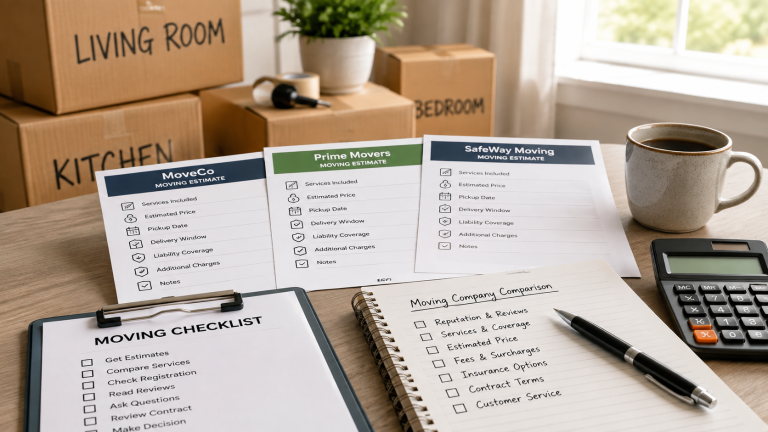
Choosing a moving company involves more than comparing prices. Learn how to compare estimates, services, registration, liability protection, possible extra charges, complaint history, and written terms before making a decision.