What to Unpack First After Moving
Learn what to unpack first after moving so the new home supports sleep, hygiene, food, medication, communication, and essential daily routines before lower-priority boxes are opened.
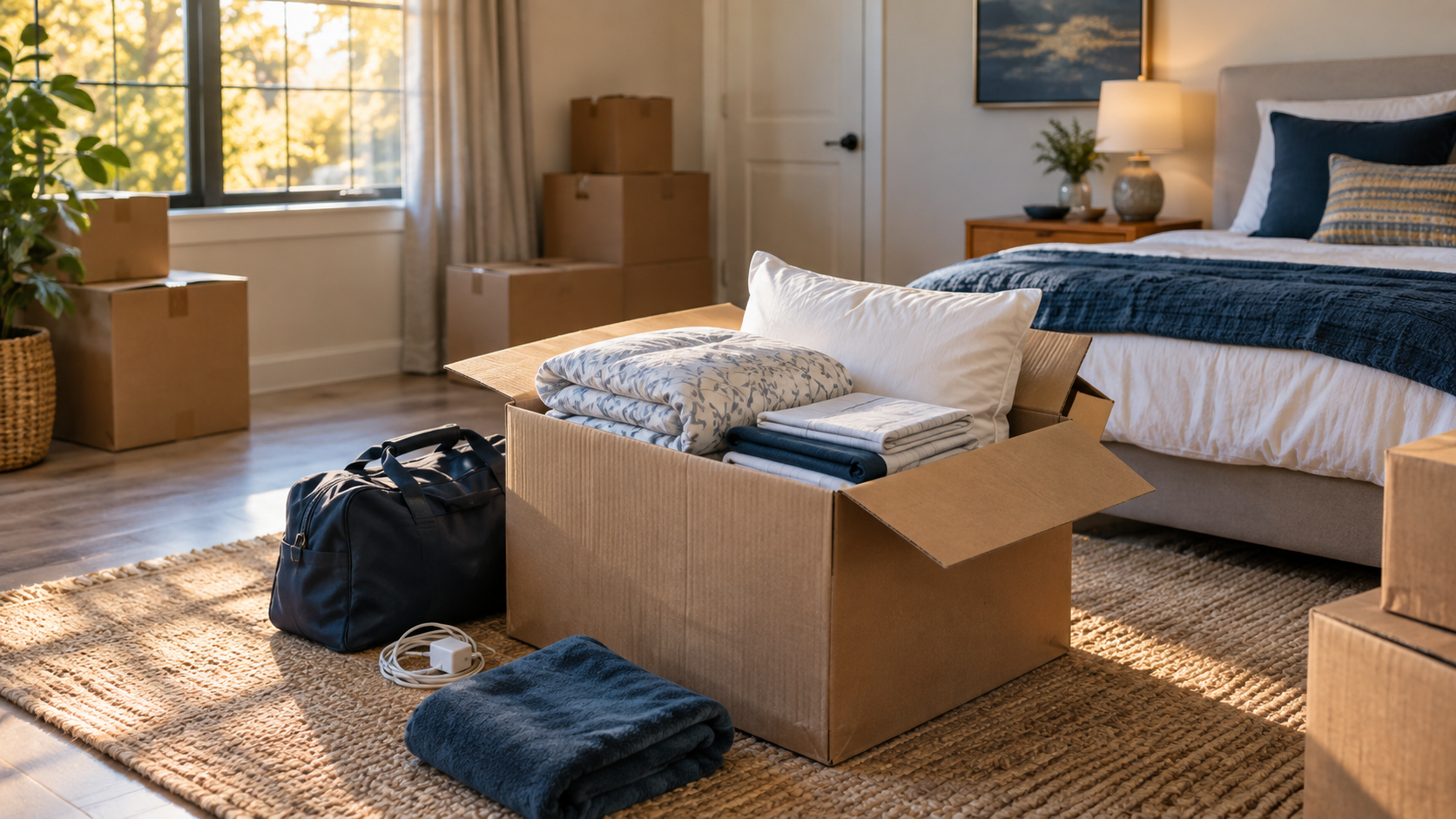
What you unpack first after moving should make the new home safe, usable, and comfortable enough for the next day. Start with medication, identification, chargers, basic food, hygiene supplies, bedding, and the tools needed to open or assemble essential items. Then set up the bedroom, bathroom, and a small part of the kitchen before opening lower-priority boxes.
This order is a practical framework, not a rule that every household must follow. Children, pets, health needs, work schedules, delivery timing, property conditions, and the type of move can change the sequence. The goal is to restore essential routines without spreading half-unpacked boxes across every room.
For the broader post-move sequence beyond the first boxes, use settling into your new home step by step.
What to Unpack First at a Glance
Use this order as a starting point and move any household-specific need higher. A person who works from home may need internet equipment early, while a family with a baby may need feeding, sleep, and changing supplies before anything else.
For the broader post-move sequence beyond the first boxes, use settling into your new home step by step.
| Priority | What to open or set up |
| 1. Immediate carry items | Medication, documents, keys, phones, chargers, water, food, and personal care items |
| 2. Safe access | Lighting, clear walkways, exits, locks, alarms, tools, and hazard control |
| 3. Sleep | Bed frame or safe sleep surface, bedding, pillows, sleepwear, and window privacy |
| 4. Hygiene | Toilet paper, soap, towels, shower supplies, and daily health items |
| 5. Food | Time-sensitive food, drinking water, a few dishes, utensils, and simple meal equipment |
| 6. Daily routines | Clothing, pet or child supplies, work or school equipment, and laundry basics |
| 7. Remaining rooms | Frequently used storage, living areas, decor, books, seasonal items, and archives |
Turn the Boxes Into a Functional Home
The MuvvKit Unpacking & Settle-In Planner provides first-day and first-week checklists, an open-first essentials list, a box tracker, and room-by-room setup pages for organizing the post-move stage.
View the Unpacking & Settle-In PlannerBefore You Open Boxes, Make the Home Usable
Pause before cutting open several cartons. Confirm that the household can enter, move through, and sleep in the home safely. Turn on enough lighting to see floors and stairs, keep exits accessible, and move cartons away from doors, vents, electrical panels, heaters, and the route between the entry and priority rooms. If you notice a gas odor, sparking, active water leak, structural concern, or another immediate hazard, leave the affected area and contact the responsible emergency service, utility, property representative, or qualified professional.
- Confirm that electricity, water, heating or cooling, and essential appliances are available as expected.
- Locate the main water shutoff, electrical panel, fire extinguisher, and any property-specific emergency instructions.
- Check locks, windows, exterior doors, railings, steps, and temporary access codes.
- Test installed alarms according to their instructions and address missing or nonworking devices through the responsible owner or qualified professional.
- Choose one clear box-opening area and collect a box cutter, scissors, trash bags, tape, markers, and basic hand tools.
- Keep children and pets away from blades, cords, loose hardware, unstable stacks, cleaning products, and open exterior doors.
The U.S. Fire Administration smoke alarm guidance recommends alarms inside and outside sleeping areas and on every level of the home, along with regular testing and maintenance. Local requirements and the responsibilities of an owner, landlord, or tenant can differ, so verify the rules that apply to the property.
Open the Personal Essentials Before Room Boxes
Unpacking is only one part of the first-day setup. The new-home first-day checklist also covers utilities, alarms, property records, security, child and pet routines, and the next morning’s priorities.
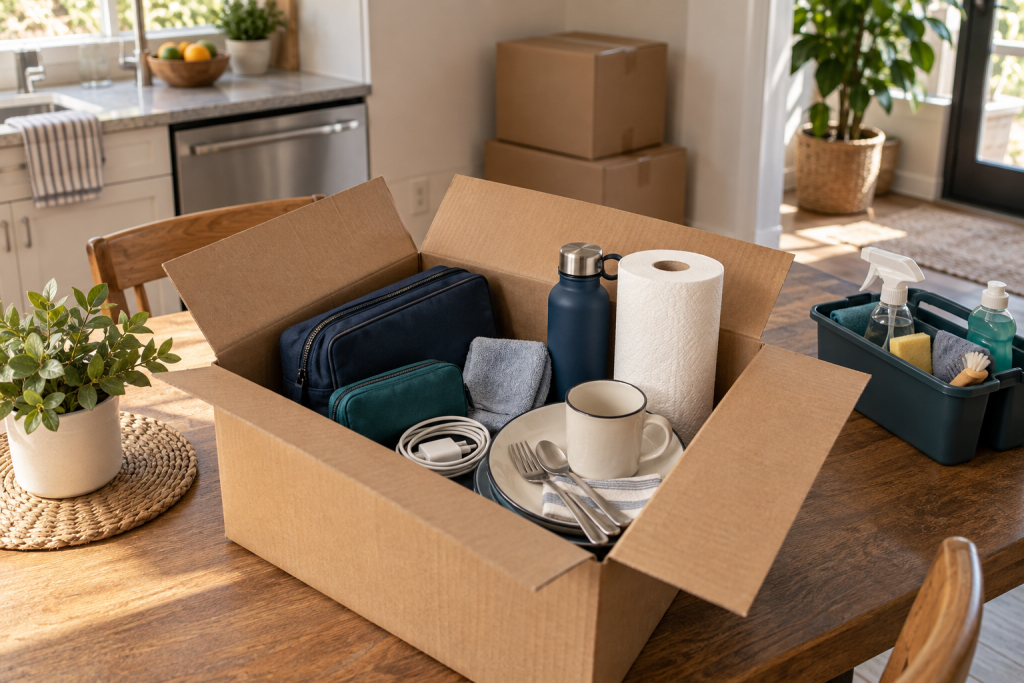
Start with the items that stayed under household control during the move. These supplies solve immediate needs while the rest of the shipment remains closed. Keep sensitive documents, medication, valuables, and devices together rather than mixing them into a general unpacking pile.
- Prescription and over-the-counter medication needed on schedule
- Identification, keys, wallet, moving documents, and property records
- Phones, charging cables, portable batteries, and essential accessibility devices
- Drinking water, simple food, feeding supplies, and any temperature-sensitive items
- Toiletries, toilet paper, soap, towels, and a change of clothing
- Basic bedding, sleepwear, comfort items, and supplies needed overnight
- Pet food, bowls, medication, litter or waste supplies, leash, carrier, and identification
If these supplies are still mixed, use the guide to what to pack in a first-night moving essentials kit to separate the items that should remain available before broad unpacking begins.
Create a Controlled Unpacking Sequence
Open one functional zone at a time. Place unopened boxes against a stable wall without blocking doors or vents, and move each carton to its labeled destination before opening it. Use a temporary surface for tools and hardware, a container for packing debris, and a separate area for items that belong elsewhere.
Choose Boxes by Function Instead of Appearance
A box marked “bedroom” may contain decor, books, or rarely used clothing, while a smaller box may hold the sheets and lamp needed that night. Read the room label and the contents note. Prioritize the carton that restores a specific function rather than the largest, nearest, or easiest box to open.
Clear destination and contents information makes this decision faster. The guide on labeling moving boxes for faster unpacking explains how room names, priority markings, and contents notes support the unloading and unpacking sequence.
Limit Work in Progress
Finish enough of one priority area to use it before starting another. This does not require perfect organization. It means the bed can be slept in, the bathroom can be used, and the kitchen can support a simple meal without having to step around several piles of unfinished boxes.
Set Up a Place to Sleep First
A usable sleep area usually gives the household the greatest return for the first evening. Assemble the bed or prepare another appropriate sleep surface before energy and daylight fade. Follow the manufacturer’s instructions for frames, bunks, cribs, adjustable bases, and wall-mounted parts. Do not improvise with missing hardware or use furniture that is unstable.
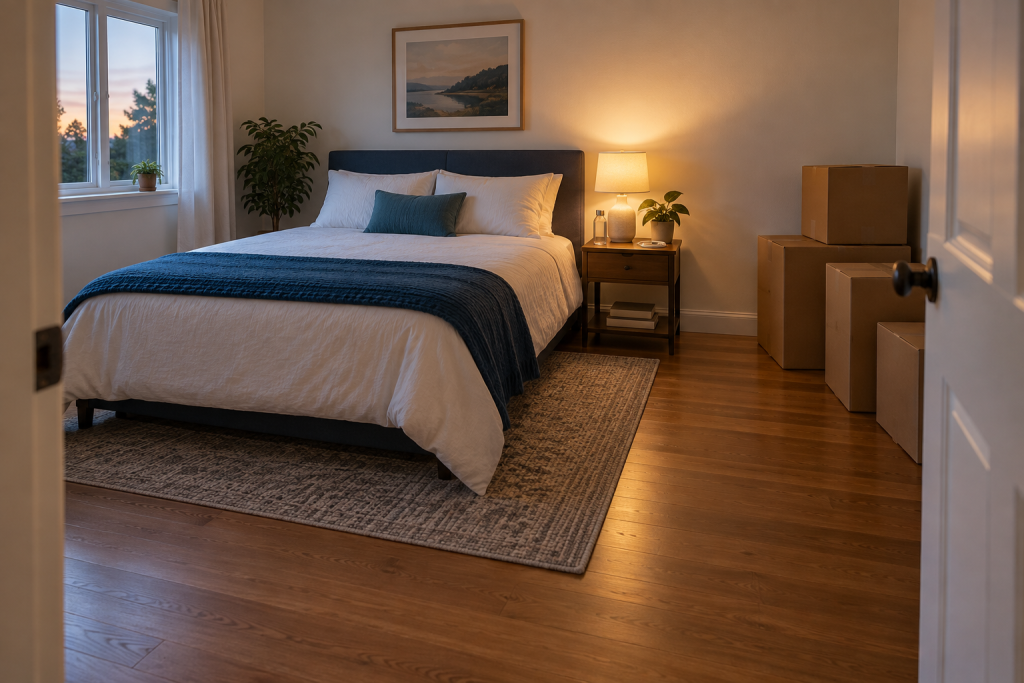
- Bed frame components, labeled hardware, tools, mattress, and foundation when used
- Sheets, pillows, blankets, sleepwear, medication, and nighttime accessibility items
- A lamp or safe light source and a clear route to the bathroom and exit
- Window coverings or another appropriate privacy solution
- Chargers, alarm clock, glasses, hearing devices, and water placed where they can be found
For children, prepare the sleep environment that is appropriate for their age and needs. Keep loose hardware, cords, plastic film, and unpacking tools out of reach. If a crib, bunk, restraint, guardrail, or other safety-related item has unclear instructions or missing parts, stop and consult the manufacturer rather than guessing.
Make One Bathroom Fully Functional
Choose one bathroom and complete it before distributing supplies across every bath. Check that the toilet, sink, drain, hot water, ventilation, and lighting work as expected. Record leaks or condition concerns before placing items in cabinets, particularly when a lease, inspection, warranty, or property agreement requires documentation.
- Toilet paper, hand soap, towels, shower supplies, and a bath mat
- Toothbrushes, daily grooming items, medication, and accessibility supplies
- Shower curtain, liner, and hooks when the property requires them
- A small trash container and only the cleaning supplies needed immediately
- Night lighting and non-slip support appropriate to the household
Store medication and cleaning products according to their labels and household safety needs. Avoid placing open chemicals, razor blades, tools, or plastic packing materials where children or pets can reach them.
Set Up a Small Working Kitchen
The first kitchen goal is not to arrange every cabinet. It is to protect time-sensitive food and support water, a basic meal, and cleanup. Confirm that the refrigerator is cooling and that appliances, outlets, gas connections, or water lines appear ready for use. Follow manufacturer and property instructions before connecting unfamiliar appliances or equipment.
- Refrigerated or frozen food that remained within safe time and temperature limits
- Drinking water, medication, or infant-feeding supplies that require refrigeration
- One place setting per person, basic utensils, cups, one pan or simple cooking appliance, and a can opener
- Dish soap, sponge, hand towel, trash bags, and paper towels or reusable cleaning cloths
- Simple food for the first meals without requiring the full pantry or every appliance
If food was without reliable refrigeration during the move, use the current FoodSafety.gov power-outage food safety guidance rather than judging safety by smell or taste alone. The guidance explains that time and temperature affect whether perishable food should be kept or discarded.
Restore Child Pet Health Work and School Routines
After sleep, hygiene, and basic food are covered, unpack the supplies that prevent tomorrow from becoming another emergency. The exact order depends on the household, so treat these as parallel needs rather than a universal ranking.
Children and Pets
- Prepare one secure, supervised area away from open doors, tools, cords, chemicals, and unstable furniture.
- Set out familiar bedding, comfort objects, feeding supplies, medication, identification, and bathroom or waste supplies.
- Keep the household routine as consistent as the move allows, and introduce the new space gradually when needed.
- Delay opening decor, toy, and storage boxes until essential sleep, feeding, school, and safety needs are covered.
Health Accessibility Work and School
- Unpack mobility, sensory, respiratory, refrigeration, charging, and communication equipment before optional household items.
- Prepare work computers, school devices, chargers, passwords, documents, uniforms, and bags needed for the next scheduled day.
- Confirm internet or phone access only to the level required for essential communication, work, school, or service appointments.
- Choose one temporary work or study surface rather than trying to complete an entire office immediately.
Unpack Clothing, Laundry, and Entry Supplies Next
Once immediate routines work, unpack enough clothing for the next several days and establish a simple laundry flow. Avoid filling every closet before you understand the new storage space. Hang or fold frequently used items first, keep seasonal clothing contained, and leave room to adjust shelf and drawer assignments.
- Daily clothing, undergarments, weather-appropriate layers, shoes, and work or school attire
- Laundry detergent, hamper, stain care, hangers, and any required machine instructions
- Coats, bags, keys, shoes, pet leashes, and reusable shopping bags near the entry
- A temporary donation or reassignment container for items that do not fit the new home or routine
Move From Essentials to Priority Rooms
After the first functional zones are ready, choose the next room based on daily use. A family may prioritize children’s rooms and food preparation, while a remote worker may need a stable office. Finish the highest-use room before distributing attention across the entire property.
- Complete frequently used kitchen storage and basic meal preparation.
- Finish the bedrooms used every night, including practical clothing storage.
- Set up the main living area only to the level needed for seating, lighting, and safe circulation.
- Organize the entry, laundry area, and everyday household supplies.
- Create stable storage for documents, tools, cleaning products, and moving records.
- Review unopened boxes before buying replacements for items you may already own.
The priorities will continue to change after the first evening. Use the first 24 hours in a new home guide to connect unpacking with access, utilities, condition records, safety checks, and immediate household routines.
Leave Lower Priority Boxes Closed
Decor, books, collections, seasonal supplies, archived records, duplicate cookware, hobby materials, and rarely used storage items can usually wait until the home supports daily life. Keeping these boxes closed reduces loose objects and gives the household time to decide where items belong.
Do not treat every unpacked possession as something that must stay. Set aside clean, usable items that no longer fit the home or routine, but do not create a large sorting project during the first night. Finish the priority areas, then handle donations, recycling, disposal, or reuse according to local rules.
The City of Portland’s moving and resource-reuse guidance offers one example of a local-government approach to borrowing, repairing, donating, recycling, and reducing unnecessary purchases. Available services and disposal rules vary by location, so use the resources for the community where the new home is located.
Plan the First Week Without Setting an Artificial Deadline
There is no universal number of days in which a household must be fully unpacked. Home size, shipment volume, work, caregiving, health, repairs, delivery timing, and available help all affect the pace. A useful target is progressive function: each work session should make one room, routine, or category easier to use.
- Select one priority room or one related group of boxes for each work session.
- Remove empty cartons and packing material before opening another large group.
- Record damage, missing items, repairs, and service follow-ups instead of relying on memory.
- Wait before buying organizers until you know what must be stored and where it is used.
- Review remaining boxes at the end of the week and revise the order based on actual household routines.
For a broader sequence of household setup, service checks, address follow-up, and room organization, continue with the first week after moving guide.
Common Unpacking Mistakes to Avoid
- Opening boxes in several rooms before any one room becomes usable
- Unpacking decor before medication, bedding, hygiene, food, work, school, child, or pet supplies
- Blocking exits, stairs, vents, panels, doors, or walking routes with boxes and packing debris
- Using damaged furniture, unfamiliar appliances, or incomplete assemblies without checking instructions
- Throwing away labeled hardware, receipts, condition evidence, manuals, or return information
- Buying duplicate supplies because remaining boxes were not checked first
- Filling cabinets and closets permanently before learning how the new space functions
- Trying to complete the entire home in one exhausted work session
The unpacking order works best when it begins during unloading. The moving day checklist from morning through the final walkthrough explains how to protect priority supplies, direct boxes to the correct rooms, and complete the handoff before broad unpacking begins.
Unpacking is only one part of getting established in a new home. Visit the Settle Into Your New Home hub for first-day, first-week, address-change, and household setup guidance.
What to Unpack First After Moving FAQs
What is the very first box I should open after moving?
Open the box or bag containing immediate household essentials: medication, documents, keys, chargers, water, basic food, toiletries, toilet paper, towels, clothing, and bedding. The exact first container depends on health, child, pet, accessibility, work, and travel needs.
Which room should I unpack first?
Prepare a safe sleep area and one working bathroom first in most households, then establish a small functional kitchen. Change the order when a health, accessibility, child, pet, work, or property need is more urgent.
Should I unpack the kitchen or bedroom first?
Set up the bed or another appropriate sleep surface before the household becomes too tired, while moving time-sensitive food into safe storage as soon as possible. The bedroom usually needs fuller setup first; the kitchen only needs enough equipment for food, water, and cleanup initially.
How do I unpack when the boxes are not labeled?
Create a sorting point near the entry, open one box at a time, and identify its destination before removing everything. Group urgent items by function, mark the box immediately, and move it to the correct room. Avoid emptying several unknown boxes into one pile.
What should stay packed until later?
Decor, collections, books, seasonal supplies, archived records, duplicate kitchen equipment, hobby materials, and rarely used storage items can usually wait until sleep, hygiene, food, clothing, communication, child, pet, work, and school routines are functioning.
How long should unpacking take after a move?
There is no universal deadline. The pace depends on the size of the home and shipment, household schedules, health, repairs, services, help, and delivery timing. Measure progress by usable rooms and restored routines rather than by an arbitrary number of days.
What should I do with empty moving boxes?
Flatten, or nest boxes only after confirming they are empty and no damage or return process requires the packaging. Keep usable materials for the remaining unpacking, then reuse, donate, recycle, or dispose of them according to local rules and their condition.
Keep the Whole Move Connected
The Complete Moving Planner Bundle brings timelines, packing plans, budget pages, moving-day information, and post-move organization into one coordinated planning system.
View the Complete Moving Planner BundleReferences and Resources
Editorial Note: The sources below were selected for current fire-safety, food-safety, and local resource-reuse information. The priority-room sequence, functional-zone method, work-in-progress limit, and staged unpacking order are MuvvKit editorial frameworks rather than government requirements. Property conditions, leases, local codes, appliance instructions, food temperatures, waste services, and household needs vary. Verify current requirements with the responsible property representative, manufacturer, utility, local authority, service provider, or qualified professional.