What to Do the Day Before Moving
Use this day before moving checklist to close the last packing tasks, separate essential items, confirm access and documents, prepare both homes, and organize the final evening.
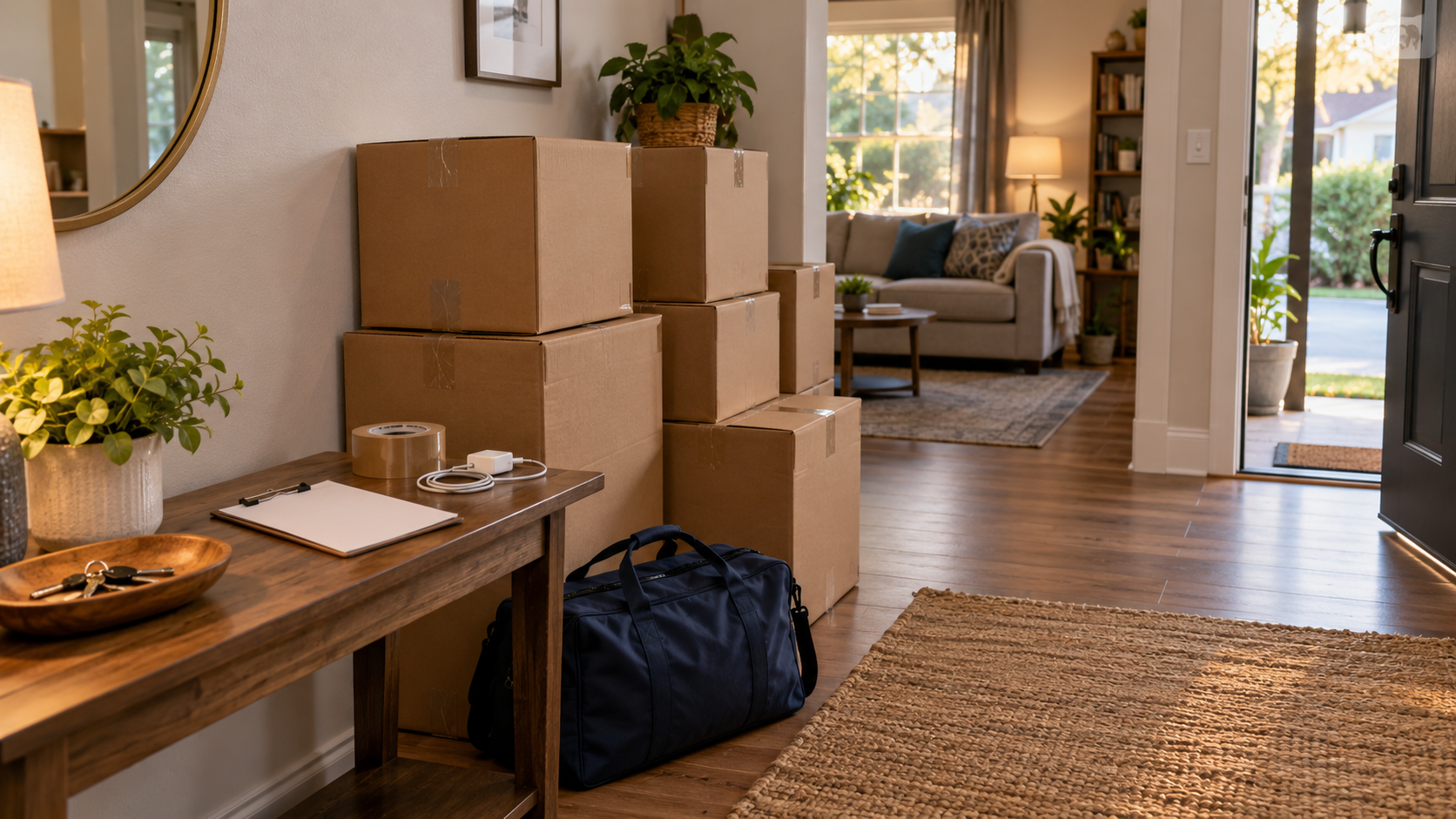
The day before moving is for closing open tasks, protecting the items that must stay with you, and preparing the home for an orderly start. Major planning decisions should already be settled. The remaining work is practical: confirm the schedule, finish only the packing that truly remains, review access and documents, clear loading paths, and prepare for the first night.
This guide uses a MuvvKit day-before sequence rather than a universal deadline. Your mover agreement, rental terms, lease, closing instructions, building rules, appliance manuals, travel plan, and household needs take priority whenever they call for different steps. Avoid adding projects simply because the move is close.
If important arrangements are still unresolved, return to what to do the week before moving day. That guide covers confirmations, address changes, prohibited items, and property preparation that are easier to handle before the final day.
Prepare Tomorrow’s Moving Details
MuvvKit Moving Day Command Sheets provide printable pages for contacts, timing, access instructions, room directions, paperwork notes, and final checks.
View the Moving Day Command SheetsDay Before Moving Checklist at a Glance
Work in an order that protects tomorrow morning. Complete outside confirmations first, close the shipment next, prepare the property, and then stop early enough to eat, charge devices, and rest.
| When | Primary focus |
| Morning | Reconfirm timing, contacts, access, payment method, weather, travel, and destination entry. |
| Early afternoon | Seal and label the last planned boxes. Separate everything that must stay with the household. |
| Late afternoon | Clear loading paths, prepare cleaning supplies, review appliances, and document property condition. |
| Evening | Set out clothing and breakfast supplies, charge devices, secure documents and keys, then stop packing. |
| Before bed | Check alarms, contacts, parking instructions, pets, children, medication, and the morning handoff plan. |
Finish the day-before review by separating the paperwork that must travel with the household. The moving day documents checklist covers mover records, property access, identification, payment information, and delivery evidence.
Confirm Tomorrow’s Schedule and Access
Use the provider’s stated confirmation process rather than repeatedly calling for reassurance. Verify the arrival or pickup window, origin and destination addresses, primary contact, included services, and the method for reporting a delay. If friends or relatives are helping, send one written message with the start time, parking plan, expected role, and contact person.
Check Both Properties
- Confirm legal parking, loading-zone restrictions, elevator or loading-dock reservations, gate codes, and building access hours.
- Identify who will open the destination and who can make decisions if the primary household contact is unavailable.
- Send the crew or helpers any limits involving stairs, narrow entrances, long carries, fragile flooring, pets, or building procedures.
- Review the route and current weather, then adjust travel time and floor protection without making unsupported promises about arrival.
Review Documents and Payment
Place the written estimate, order for service, bill of lading information, inventory forms, rental agreement, reservation, lease or closing instructions, and insurance records in the personal carry group. Save current phone numbers for the company, driver or dispatch team, building contacts, and the destination contact.
For an interstate household-goods move, the FMCSA moving checklist tells consumers to read the estimate, bill of lading, inventory, and other completed documents before signing. It also advises keeping the bill of lading until delivery, payment, and any claims are complete. These federal materials address interstate professional moves; state rules may govern intrastate moves.
- Verify the accepted payment method and the point at which payment is due.
- Ask how additions or changes will be documented before approving them.
- Keep payment information, identification, and signed documents outside the shipment.
- Do not sign a blank, incomplete, or unread document merely to keep the schedule moving.
Finish Packing Without Losing Essential Items
Pack only the remaining planned items. The last day is not a good time to reopen finished cartons, reorganize entire rooms, or make broad donation decisions. Close one area at a time and keep a short written list of anything that must remain available overnight or during the morning.
Seal and Label the Last Boxes
- Close cartons completely and reinforce them only as needed for the box and contents.
- Add the destination room, a brief contents description, handling information, and unpacking priority.
- Place hardware in a closed bag and connect it securely to the related furniture part without damaging the finish.
- Keep boxes within safe lifting limits and separate unusually heavy, fragile, or awkward items for discussion with the crew lead.
If the last cartons are difficult to identify, use how to label moving boxes for faster unpacking. A consistent room-and-priority system is more useful than adding several competing codes on the final night.
Create a Protected No Load Area
Choose a closed room, locked vehicle, empty bathtub, or clearly separated corner that the moving crew will not enter. Tell every household member and the crew lead that nothing in this area belongs in the shipment. Physical separation matters more than a sign alone.
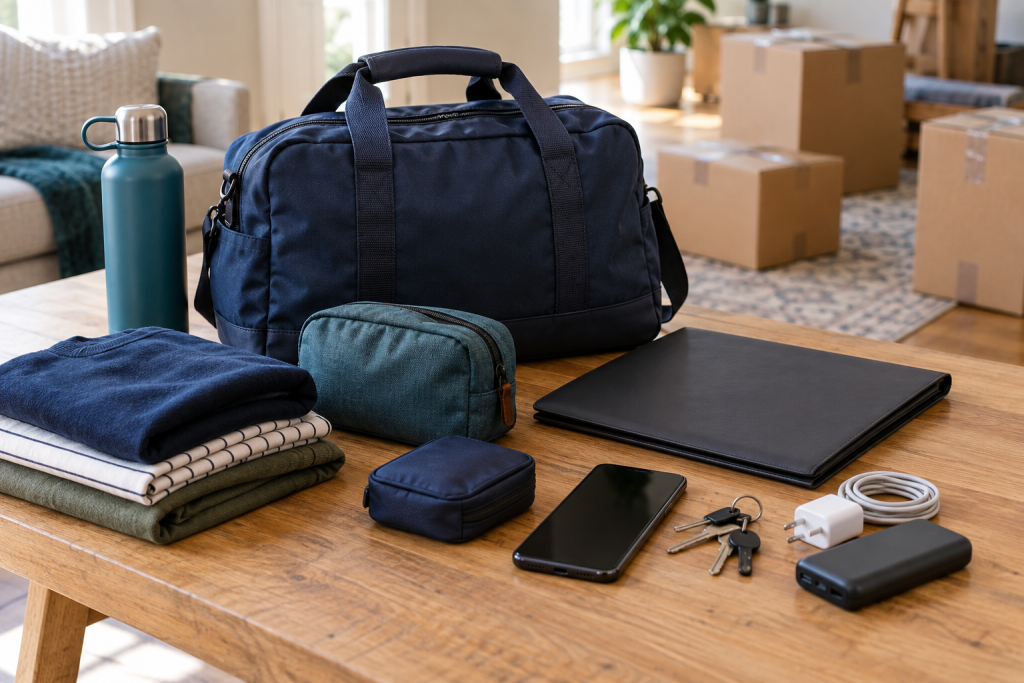
- Identification, keys, wallets, payment methods, travel information, and property-access details
- Prescriptions, medical devices, glasses, mobility aids, and health supplies needed during travel
- Mover or rental paperwork, leases or closing records, inventories, and insurance information
- Phones, laptops, chargers, portable batteries, and equipment needed before regular unpacking
- Irreplaceable valuables, confidential records, and small sentimental items kept under personal control
- Clothing, toiletries, bedding, food, water, pet supplies, and other first-night necessities
Use what to pack in a first-night moving essentials kit to check the personal carry group. Adjust it for travel length, weather, medication, children, pets, work, and possible delays in reaching the shipment.
Prepare the Old Home for Loading
Walk the route from every active room to the vehicle area. Remove loose rugs, cords, low decorations, unstable stacks, and unnecessary furniture from the pathway. Keep exits clear and do not create a new obstruction by placing finished boxes in halls or on narrow stairs.
Stage Boxes Without Blocking the Route
- Group completed boxes by room or loading plan while preserving a clear path.
- Keep fragile, high-value, unusually heavy, and personally transported items visibly separate.
- Reserve one accessible area for tape, markers, tools, spare hardware bags, and basic cleanup supplies.
- Arrange child and pet supervision so doors can open without creating an escape or injury risk.
Keep Final Cleaning Supplies Available
Set aside a small cleaning group for use after the last item leaves: trash bags, broom, dustpan, vacuum if needed, cloths, and only the cleaning products permitted by the property instructions. Review the lease, sale agreement, or handover directions for cleaning, fixtures, keys, meter readings, and condition documentation.
Photograph relevant existing damage and the condition of spaces when appropriate for your handover. Avoid relying on photographs as a substitute for required inspection forms, signatures, or property procedures.
Handle Appliances and Restricted Materials Carefully
Follow the manufacturer’s instructions and the mover’s requirements for refrigerators, freezers, washers, dryers, ranges, televisions, exercise equipment, and other specialty items. Preparation steps differ by model and transport method. If disconnection requires skills, tools, or authorization you do not have, use a qualified technician rather than improvising late at night.
Resolve Items the Shipment Cannot Take
Check the current prohibited-items policy for the mover, container company, or rental provider. Do not assume that every company treats fuel, propane, paint, chemicals, aerosols, batteries, plants, food, and temperature-sensitive items the same way.
The EPA household hazardous waste guidance explains that products such as some paints, cleaners, oils, batteries, and pesticides may need special handling. Follow product labels, keep hazardous products in their original containers, do not mix them, and use local disposal instructions. Do not pour them into drains or abandon them at the property.
Prepare Travel and the New Home
Confirm the route, fuel or charging plan, lodging if needed, destination access, and the person traveling first. Keep the new-home keys, gate codes, parking instructions, and contact numbers with that person. Check that essential utilities begin when required by the household and property agreement.
Make the First Night Easier
- Choose where household members and pets can safely sleep before broad unpacking begins.
- Keep medicines, chargers, toiletries, bedding, water, simple food, and basic tools easy to identify.
- Place destination room plans where the unloading lead can use them without searching through boxes.
- Confirm that urgent deliveries, service appointments, or key exchanges have a clear owner and contact method.
Check Address and Mail Arrangements
Review the effective date on any address or mail-forwarding request and retain its confirmation. Forwarding does not update banks, insurers, employers, government agencies, medical providers, schools, subscriptions, or other organizations automatically.
The official USPS change-of-address and mail-forwarding page states that forwarding may begin within three business days but advises allowing up to two weeks. If this task remains unfinished on the day before moving, use the official USPS process and update critical senders directly; do not assume every piece of mail will be forwarded.
Set Up the Final Evening
Choose a stopping time. Eat a simple meal, dispose of ordinary trash according to local and property rules, charge devices, and place tomorrow’s clothing where it will not be packed. Keep water, medication, toiletries, towels, breakfast items, and pet supplies accessible.
Complete a Calm Evening Review
- Set alarms and confirm who will wake children, handle pets, meet the crew, and manage the destination.
- Put keys, identification, documents, payment method, phones, chargers, and route information together.
- Check that hallways, stairs, doors, and the loading entrance remain clear and well lit.
- Place valuables and the personal carry group in the protected no-load area or vehicle.
- Stop optional repairs, sorting, and decorative cleaning that could interfere with rest or create unfinished work.
Adequate rest is part of preparation. If tasks remain, identify only those that affect safety, access, essential living needs, legal or contractual obligations, or the ability to load. Move lower-priority work to an appropriate later time.

Prepare the Moving Day Handoff
Before bed, decide what must happen before loading begins. Leave basic bedding, breakfast items, cleaning tools, and overnight supplies accessible, but keep them contained so they can be closed quickly. Write down the few morning tasks that cannot be completed earlier.
- Strip and contain bedding after household members wake.
- Pack toiletries and medication only after their final use, keeping needed doses accessible.
- Place refrigerated travel food into a prepared cooler at the appropriate time.
- Photograph or record meter readings if required by the property instructions.
- Brief the crew leads on access, fragile or unusual items, the no-load area, and the person authorized to approve changes.
When the crew or helpers arrive, continue with the moving day checklist from morning through the final walkthrough. It organizes loading, travel, unloading, documents, and the final property sweep in chronological order.
Common Day Before Moving Mistakes to Avoid
- Reopening completed boxes to improve organization that is already adequate
- Packing keys, medication, documents, chargers, valuables, or first-night supplies into the shipment
- Waiting until late evening to verify parking, elevator access, payment method, or arrival instructions
- Disconnecting an unfamiliar appliance without checking the manual, provider requirements, or need for a technician
- Pouring chemicals down a drain or leaving restricted materials for someone else to handle
- Blocking exits and loading paths with staged boxes
- Starting optional repairs or deep-cleaning projects that cannot be finished safely
- Staying up so late that fatigue interferes with decisions and supervision the next morning
Day Before Moving FAQs
What should I pack the day before moving?
Seal the remaining planned boxes, but keep overnight clothing, toiletries, medication, documents, keys, electronics, chargers, bedding, cleaning tools, food, water, pet supplies, and travel items accessible. The exact list depends on the household, journey, weather, and when the shipment will be available.
Should everything be boxed before movers arrive?
Items included in the shipment generally need to be prepared according to the mover’s instructions before loading begins. Some furniture, specialty items, and mover-provided packing services may follow a different process. Confirm the agreed scope instead of assuming the crew will pack loose belongings.
Should I empty and unplug the refrigerator the day before?
Follow the appliance manufacturer’s instructions and the mover’s requirements. The correct timing varies by model, food contents, transport method, and whether a technician is needed. Do not apply one universal unplugging schedule to every refrigerator or freezer.
What should stay with me during the move?
Keep identification, keys, payment methods, essential records, prescriptions, medical devices, electronics, chargers, irreplaceable valuables, travel information, and first-night supplies under personal control. Secure them in a clearly protected no-load area.
What if I am still packing late at night?
Stop broad sorting and focus on safe loading access, closing active cartons, separating essentials, and containing loose items. Tell the mover about any unfinished packing that could change the agreed service. Avoid hiding the condition of the shipment or authorizing unpriced work without documentation.
How clean should the old home be before moving day?
Use the lease, sale agreement, closing documents, or property instructions as the standard. Keep the supplies needed for cleaning after loading. Requirements vary, so do not rely on a generic checklist when a written handover condition applies.
When should I confirm the mover’s arrival time?
Follow the company’s stated confirmation process. If a final confirmation is expected, verify the arrival window, contact method, addresses, access restrictions, and included services before the office closes. Retain written confirmation when available.
Keep the Rest of the Move Connected
The Complete Moving Planner Bundle brings timelines, packing plans, budgets, mover information, and moving-day details into one coordinated system.
View the Complete Moving Planner BundleReferences and Resources
Editorial Note: These references are primary U.S. government resources for interstate household-goods moves, household hazardous waste, and mail forwarding. MuvvKit developed the day-before sequence, protected no-load area, stopping time, and evening review as practical organizational methods rather than government requirements. Rules, contracts, provider policies, appliance instructions, building procedures, fees, and local disposal options can change. Verify current details with the responsible agency, mover, rental provider, property professional, manufacturer, building, utility, or local authority.