Moving Day Guide: What to Do Before, During, and After Loading
Stay organized on moving day with a practical step-by-step guide covering what to do before, during, and after loading. Learn how to protect essentials, supervise the loading process, complete a final home walkthrough, and prepare for delivery.
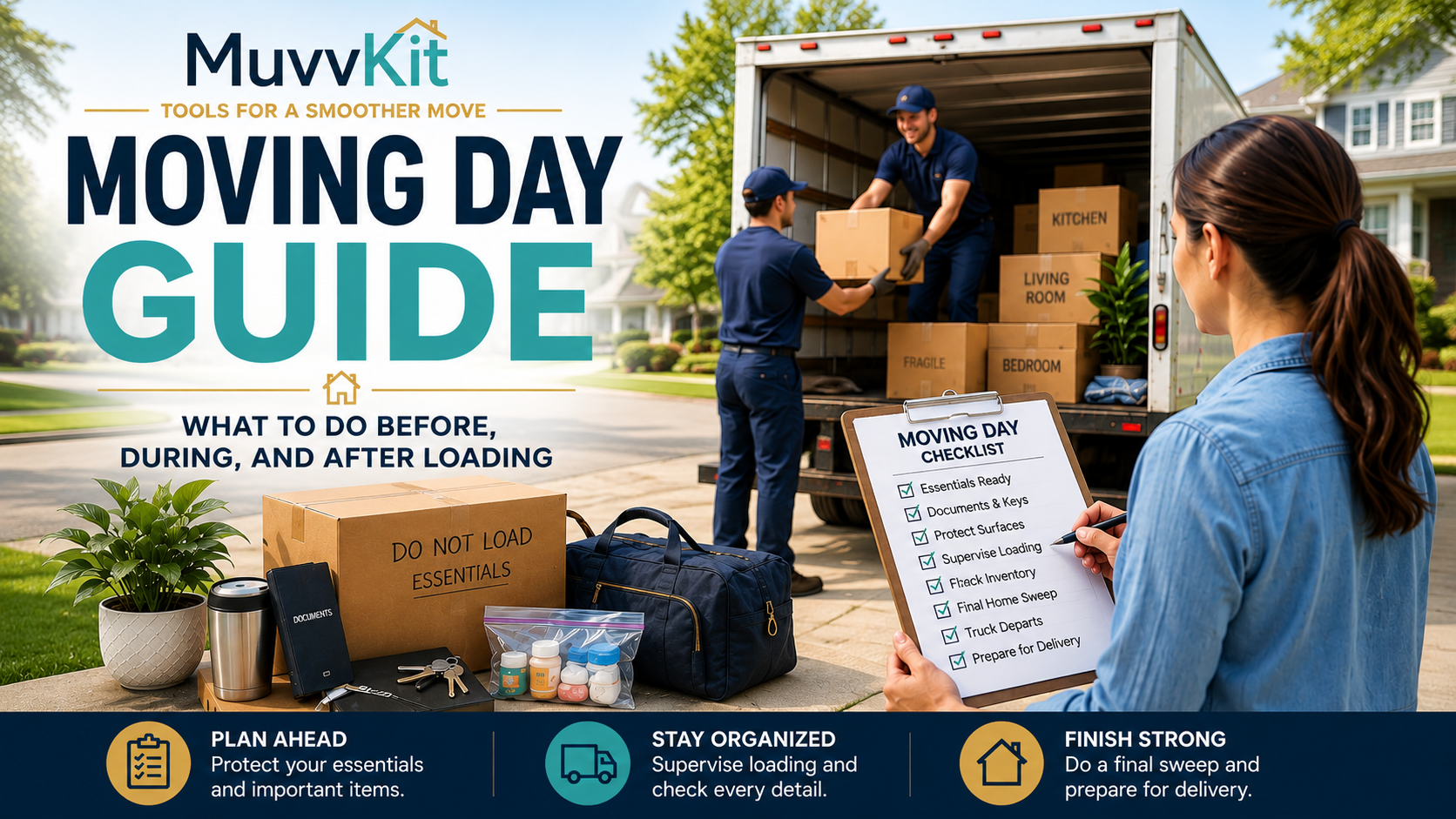
A practical household moving-day system for staying organized while your home is being loaded.
| Quick goal Keep people safe, keep essential items with you, verify what is being loaded, document the condition of your shipment, and leave the origin home only after a deliberate final check. |
Moving Day Is a Handoff, Not Just a Loading Job
By moving day, most of the planning and packing should already be finished. The focus now changes. You are no longer deciding what to move; you are managing the handoff of your household from the home to the moving vehicle.
That makes moving day a coordination day. You need a clear path for movers, a way to protect items that must stay with you, access to important documents, and enough attention left to check rooms before the truck leaves. If you are using a professional mover, you also need to review the paperwork and inventory rather than treating signatures as a formality.
This guide covers the period immediately before loading, the loading process itself, and the final steps after the truck is loaded. It works for both professional-mover and DIY moves, with extra notes where the process differs.
For a chronological list you can follow throughout the day, use this moving day checklist from morning through the final walkthrough.
Before the Movers Arrive or Loading Begins
1. Start With a Moving-Day Command Area
Choose one small area that is not part of the loading path and use it as your moving-day command area. Keep your phone, charger, keys, wallet, identification, moving documents, water, basic cleaning supplies, and any notes you need there.
The purpose is simple: you should not have to search through packed boxes for something important while people are carrying furniture through the house.
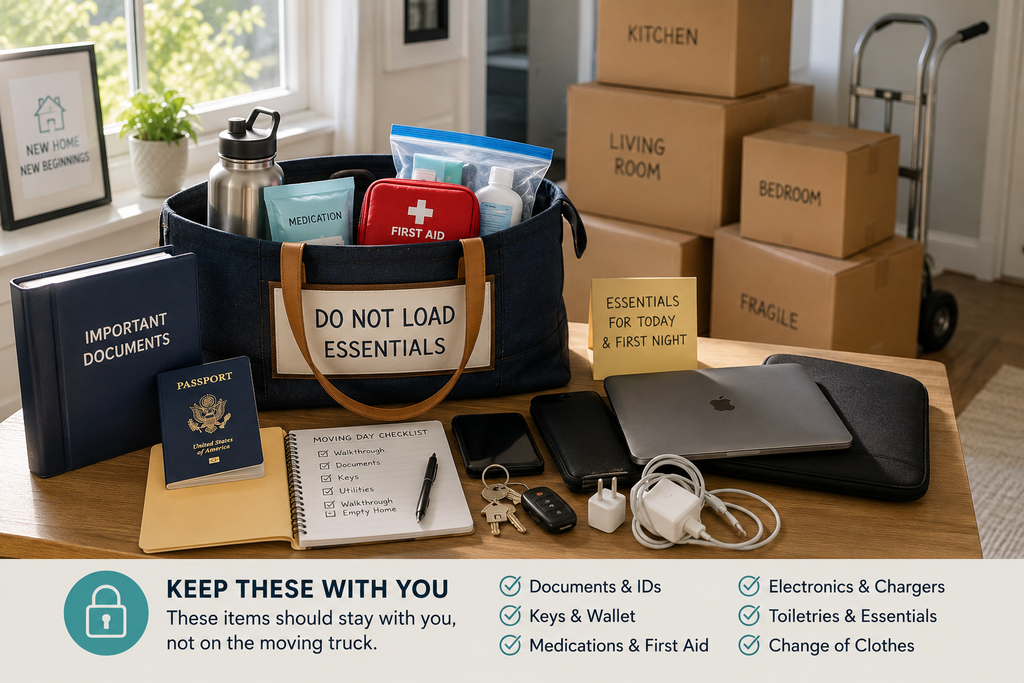
2. Separate Everything That Must Not Go on the Truck
Create a clearly marked no-load zone before anyone starts carrying items out. A closed bathroom, empty closet, section of the kitchen, or your personal vehicle can work if it is obvious and out of the movers’ path.
- Identification, wallets, cash, checkbooks, and important documents.
- Prescription medications and immediate personal-care items.
- Phones, laptops, chargers, work devices, and sensitive electronics you plan to carry yourself.
- Jewelry, irreplaceable keepsakes, and other small valuables.
- Travel bags, overnight supplies, children’s essentials, and pet supplies.
- Keys, garage remotes, access cards, and documents needed for the old or new home.
Keep the estimate, bill of lading, inventory, access information, identification, and payment records outside the shipment. This guide to moving day documents to keep within reach explains how to organize the working file for loading, travel, delivery, and closeout.
| MuvvKit tip Do not rely on a sticky note on one box. Physically separate no-load items from the shipment and tell the crew leader or every DIY helper that the area is off-limits. |
3. Walk the Home Before the First Item Leaves
Do a fast room-by-room walkthrough. Look for anything that is still attached, plugged in, hidden, or easy to overlook: wall-mounted items, shower curtains, medicine cabinets, attic or basement shelves, outdoor tools, garage storage, items behind doors, and food or supplies in secondary refrigerators.
Confirm that boxes are closed, labeled, and ready to move. If you have fragile or high-value items, make sure their handling instructions are clear before they disappear into the flow of loading.
4. Prepare Safe, Clear Paths
Open gates and doors that the crew will use, move vehicles that block access, and remove small objects from hallways and stairs. Keep children and pets away from the loading route. If weather is poor, protect slippery entry areas and have towels or floor protection ready.
For a DIY move, decide who will carry, who will stay at the truck to arrange the load, and who will act as the spotter for large furniture. Avoid having everyone make independent decisions about where items go.
5. Confirm the Plan With the Crew Leader or Your Helpers
Before loading begins, take a few minutes to confirm the order of work. Point out the no-load area, fragile items, furniture that needs disassembly, narrow access points, and anything requiring special handling. Confirm where the truck is parked and which entrance will be used.
If you hired a professional mover, also confirm how you can reach the company or driver during transit and make sure they have reliable contact information for you.
The final seven days are easier to manage when packing, access, paperwork, utilities, and personal essentials are reviewed in a deliberate order. Use this guide to decide what to do the week before moving day.
If You Are Using a Professional Interstate Mover
Interstate household-goods moves have federal consumer-protection requirements. The Federal Motor Carrier Safety Administration (FMCSA) advises consumers to read moving documents carefully, be present during pickup and delivery, supervise the process, and retain key records.
Review the Bill of Lading Before Signing
The bill of lading is the transportation contract between you and the mover. Read it before you sign. Check the mover information, pickup and delivery dates or windows, payment terms, services, and valuation or liability information. Do not sign a blank document or sign something you believe is inaccurate just to keep the move moving.
Keep your copy accessible rather than packing it. FMCSA recommends retaining the bill of lading until the shipment is delivered, charges are paid, and any claims are settled.
Review the Shipment Inventory
A professional interstate mover must prepare an inventory of the shipment before or at loading. The inventory records the items being moved and their condition. Walk with the mover when practical, question condition codes you do not understand, and note disagreements before signing.
This is especially important for furniture, appliances, electronics, artwork, and other items where existing scratches, dents, or damage may matter later.
| Important Federal rules discussed here apply specifically to interstate household-goods moves. Intrastate moves can be governed by different state rules, so check your state’s requirements when your move stays within one state. |
During Loading: Your Main Job Is to Supervise the Flow
1. Stay Available Without Blocking the Crew
You do not need to stand over every box, but someone responsible should remain available throughout loading. Movers may need decisions about what goes, what stays, whether an item can be disassembled, or how something should be handled.
If you cannot be present, designate a trusted adult who understands the plan and has authority to make decisions on your behalf.
2. Keep the No-Load Zone Protected
As rooms empty, the visual distinction between shipment items and personal travel items can disappear. Recheck your no-load area periodically. If possible, place those items in your locked personal vehicle once you no longer need them inside.
3. Watch the Inventory and Condition Process
For a professional move, follow the inventory process closely enough to catch obvious omissions or condition descriptions you dispute. Take your own photos of high-value or easily damaged items before they are loaded if you have not already done so.
For a DIY move, a simple numbered box list can serve a similar organizational purpose. You do not need to record every sock or spoon; track containers and major unboxed items so you can recognize whether everything reaches the destination.
4. Keep Essential Items Accessible
Loading order affects unloading order. Items placed deepest in the truck may be among the last items available at the destination. For a DIY move, think ahead about what you will need first: a basic tool kit, cleaning supplies, toilet paper, bedding, a small kitchen box, and the first-night essentials.
Do not put critical medications, identification, irreplaceable documents, or other must-have personal items in the moving truck simply because you want them unloaded first. Those belong with you.
5. Control Last-Minute Changes
Moving day often exposes items that were forgotten or plans that changed. If you are using professional movers, adding items or services can affect the move and its charges. Tell the crew leader about changes rather than quietly adding items to the shipment.
For a DIY move, avoid the opposite problem: filling every remaining gap with loose, unprotected items. If something needs a box, wrap, strap, or proper protection, take the time to secure it.
6. Take Care of the People Doing the Work
Keep water available and make sure people can take reasonable breaks, especially in hot or humid conditions. Keep the loading route free of spectators, pets, and unnecessary clutter. Moving faster is not useful if it creates injuries or damaged belongings.
Make Moving Day Easier
Keep the Day Organized With MuvvKit Moving Day Command Sheets
Keep important details, responsibilities, loading-day tasks, and last-minute checks in one practical place so you can spend less time trying to remember what comes next.
Explore the Moving Day Command Sheets →Before the Truck Door Closes
This is one of the most important checkpoints of the day. Do not let the sense of momentum rush you out of the home.
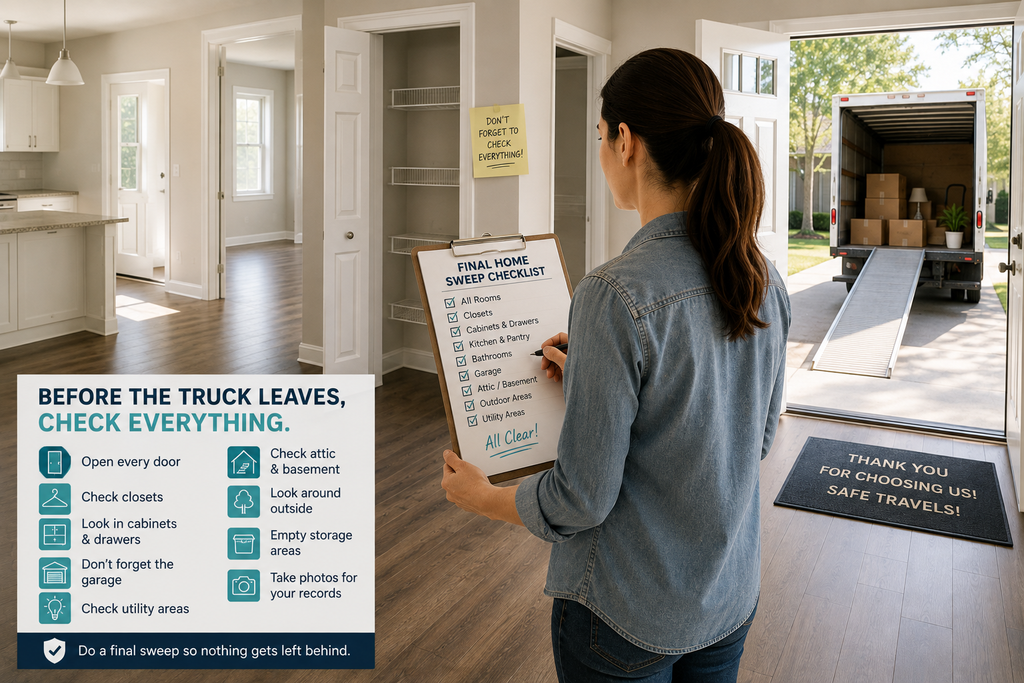
Do a Deliberate Final Sweep
Walk every space, even rooms you believe are empty. Open closets, cabinets, drawers, and built-in storage. Check the attic, basement, garage, shed, patio, balcony, laundry area, and behind doors. Look at walls for hooks, mirrors, routers, mounted devices, and charging cables.
FMCSA specifically recommends taking one final look throughout the home before the moving van leaves to make sure nothing has been left behind.
Confirm What Is Staying With the Property
Make sure you have not accidentally removed an item that is supposed to remain, such as an agreed appliance, garage remote, property key, or fixture. Keep house keys and access items organized for the owner, buyer, landlord, or property manager according to your closing or lease instructions.
Photograph the Empty Home
Take a simple set of time-stamped photos or video after the household goods are out. Capture the condition of major rooms and any areas relevant to a rental move-out or property handoff. These photos are not a substitute for required inspections, but they can create a useful personal record.
Secure the Origin Home
- Close and lock windows.
- Turn off lights as appropriate.
- Check faucets, toilets, and appliances that should be off.
- Set thermostats according to your handoff plan.
- Close and lock exterior doors, garages, gates, and storage areas.
- Take or leave keys exactly as required by your lease, sale, or property-management instructions.
After Loading: Before You Leave the Origin
1. Keep Your Moving Documents With You
Put the bill of lading, inventory, estimate, mover contact information, receipts, and any other active moving records in your personal travel bag or digital document folder. Do not place the only copies in the shipment.
2. Confirm Contact and Destination Details
Make sure the driver or moving company has your current phone number and the correct destination address. If there are access instructions, gate codes, parking restrictions, elevator reservations, or a different contact person at the destination, confirm them before the truck departs.
3. Record Any Problems While They Are Fresh
If something unusual happened during loading – visible damage, a disputed inventory notation, a service change, an access problem, or a charge you did not expect – write down what happened and keep related photos or documents together. Clear records are easier to use later than memories reconstructed days afterward.
4. Prepare for Delivery, Not Just the Drive
Your next operational goal is receiving the shipment. Know your delivery window, keep your phone reachable, and make sure someone can be present at the destination. For professional interstate moves, FMCSA advises consumers to supervise unloading and note missing or damaged items on the inventory before signing delivery documents.
If you discover loss or damage after an interstate move, review the mover’s claims process promptly. FMCSA states that written claims for loss or damage must be filed with the mover within nine months of delivery.
A Simple Moving-Day Sequence
| Stage | Main Focus | Do Not Leave Without |
| Before loading | Separate essentials, clear paths, confirm the plan | No-load zone and documents secured |
| During loading | Stay available, supervise, track items and condition | Questions and changes resolved |
| Before truck leaves | Final sweep and property check | Every room, storage area, and exterior space checked |
| After loading | Secure the home and prepare for delivery | Documents, contacts, destination details, and records with you |
Common Moving-Day Mistakes to Avoid
- Packing your wallet, medication, keys, documents, chargers, or first-night bag onto the truck.
- Signing moving paperwork without reading it or keeping a copy.
- Failing to question inaccurate inventory condition notes.
- Leaving children or pets in active loading paths.
- Allowing last-minute loose items to be loaded without protection.
- Leaving the home before checking closets, cabinets, garages, outdoor areas, and storage spaces.
- Losing track of the mover’s contact information or delivery window.
- Waiting too long to document a problem, missing item, or visible damage.
Moving Day Checklist
Moving Day Checklist
- ☐ Moving-day command area established
- ☐ No-load zone identified and communicated
- ☐ Pre-loading room walkthrough completed
- ☐ Loading paths cleared
- ☐ Pets and children kept away from loading areas
- ☐ Loading plan and special-handling items reviewed
- ☐ Professional-mover documents reviewed
- ☐ Inventory and major-item condition tracked
- ☐ Essential travel items separated from the load
- ☐ Final room-by-room sweep completed
- ☐ Exterior areas checked
- ☐ Empty-home photos taken if needed
- ☐ Origin property secured
- ☐ Moving documents and contact details accessible
- ☐ Destination and delivery details confirmed
- ☐ Loading-day problems documented
The Bottom Line
A successful moving day is less about rushing and more about controlling the handoff. Separate what stays with you, keep the loading route safe, remain available for decisions, verify the professional mover’s paperwork and inventory, and do a deliberate final sweep before the truck leaves.
Once loading is complete, shift your attention to the destination. Keep your records accessible, confirm delivery details, and be ready to supervise unloading. A few disciplined checkpoints can prevent many of the most frustrating moving-day mistakes.
Continue Your Move With MuvvKit
Use this guide alongside your moving timeline, packing plan, moving-day command sheets, and settle-in checklist so each stage of the move connects to the next. Planned internal links for MuvvKit can be activated as the related articles and product pages are published.
Plan Beyond Moving Day
Organize Your Move From Start to Finish
The MuvvKit Complete Moving Planner Bundle brings your timeline, packing, budget, household organization, moving-day planning, and other essential move details together in one organized system.
Explore the Complete Moving Planner →References & Sources
Federal Motor Carrier Safety Administration (FMCSA)
- Moving Checklist. https://www.fmcsa.dot.gov/protect-your-move/moving-checklist
- Pickup of My Shipment of Household Goods (Subpart E). https://www.fmcsa.dot.gov/protect-your-move/how-to/subpartE
- Consumer Rights and Responsibilities. https://www.fmcsa.dot.gov/protect-your-move/consumer-rights
- Tips for a Successful Move. https://www.fmcsa.dot.gov/protect-your-move/tips-for-success
- What if there are problems? https://www.fmcsa.dot.gov/protect-your-move/what-if-problems
Editorial note: The federal mover requirements cited in this article apply to interstate household-goods moves. State requirements may differ for moves that remain within one state. This article is educational and is not legal advice.