Settle Into Your New Home One Step at a Time
Moving day may be finished, but the move is not quite over. Make your new home functional first, unpack the rooms you need most, work through important updates, and finish the remaining tasks gradually.
Your Settle-In Roadmap
Make the Home Functional Before You Make It Finished
Your first goal is not perfect organization. It is creating enough order for normal household life to begin again.
After moving into a new home, the fastest way to feel organized is not to unpack everything at once. Start by locating essential belongings, checking basic household services, preparing sleeping and bathroom areas, and getting the most-used rooms working first.
Work Through the Days After Your Move in a Logical Order
Focus on making the home usable first, then work through administrative tasks and remaining boxes gradually.
Make the First Night Functional
Set up enough of the home to eat, sleep, clean up and handle normal personal needs.
- Prepare beds and bedding
- Locate medications
- Set out toiletries
- Charge phones and devices
- Locate clothing and towels
- Prepare food and water
- Set up children’s and pet necessities
Check Your New Home Essentials
Confirm that basic household systems and frequently used areas are working as expected.
- Water
- Electricity
- Heating or cooling
- Basic lighting
- Internet or communication services
- Keys and access
- Basic appliances and bathrooms
Unpack Priority Rooms First
Give your attention to the rooms that make everyday life possible before decorative or storage areas.
- Bedrooms
- Bathrooms
- Kitchen basics
- Children’s spaces
- Pet areas
- Work or school necessities
Organize Moving Documents and Receipts
Keep your move-related paperwork together until expenses, services and outstanding issues are completely resolved.
- Moving contracts
- Receipts
- Estimates
- Inventory information
- Rental records
- Utility information
Update Your Address and Important Accounts
Work through address changes by category instead of trying to remember every organization at once.
- Mail and delivery records
- Banks and financial accounts
- Insurance providers
- Employer
- Schools
- Healthcare providers
- Subscriptions and memberships
Inspect and Account for Your Belongings
As boxes are opened, note any belongings that appear damaged or missing and keep relevant records together.
- Check important belongings
- Note obvious damage
- Identify missing items
- Keep photographs or documentation where useful
- Review any applicable mover procedures promptly
Finish Unpacking Without Creating New Clutter
Continue room by room and give belongings a practical home rather than creating long-term temporary piles.
- Finish one manageable area at a time
- Break down empty boxes
- Separate packing materials
- Decide where belongings belong
- Avoid opening unnecessary boxes all at once
Establish Your New Household Routine
Once the essentials are working, begin transitioning from moving mode into everyday life in your new home.
- Learn trash and recycling schedules
- Restock household basics
- Organize keys
- Establish grocery routines
- Finish remaining address changes
- Create a list of non-urgent household tasks
What Should You Unpack First?
Start with what makes daily life easier rather than what makes the house look finished.
Bedroom
Prepare a comfortable place to sleep before spending energy on less urgent areas.
Bathroom
Set out towels, toiletries, medications and everyday bathroom necessities.
Kitchen Basics
Focus first on the dishes, food and simple cooking items needed for normal meals.
Children & Pets
Establish familiar sleeping, feeding and everyday-use areas as early as practical.
Work & School
Locate computers, chargers, documents, backpacks and other items needed for returning to normal schedules.
Storage & Décor
Leave less urgent decorative and long-term storage items until the everyday areas are functional.
Address Change Categories
- Mail forwarding
- Financial institutions
- Insurance providers
- Employer records
- Schools
- Healthcare providers
- Subscriptions
- Memberships
- Vehicle-related records
- Government accounts where applicable
Work Through Address Changes by Category
You do not need to remember every organization from memory. Start with high-priority services and accounts, then work through subscriptions, memberships and less urgent records.
Keep a simple record of what has already been updated so you do not repeatedly check the same accounts.
Keep Your Moving Records Organized a Little Longer
Avoid discarding moving records immediately after the boxes arrive. You may still need receipts, contracts, estimates, expense records or other documents while settling outstanding move-related matters.
Create one temporary location for these records until you are confident the move is financially and administratively complete.
- Moving receipts
- Expense records
- Moving-company documents
- Rental agreements
- Utility records
- Inventory information
- Relevant correspondence
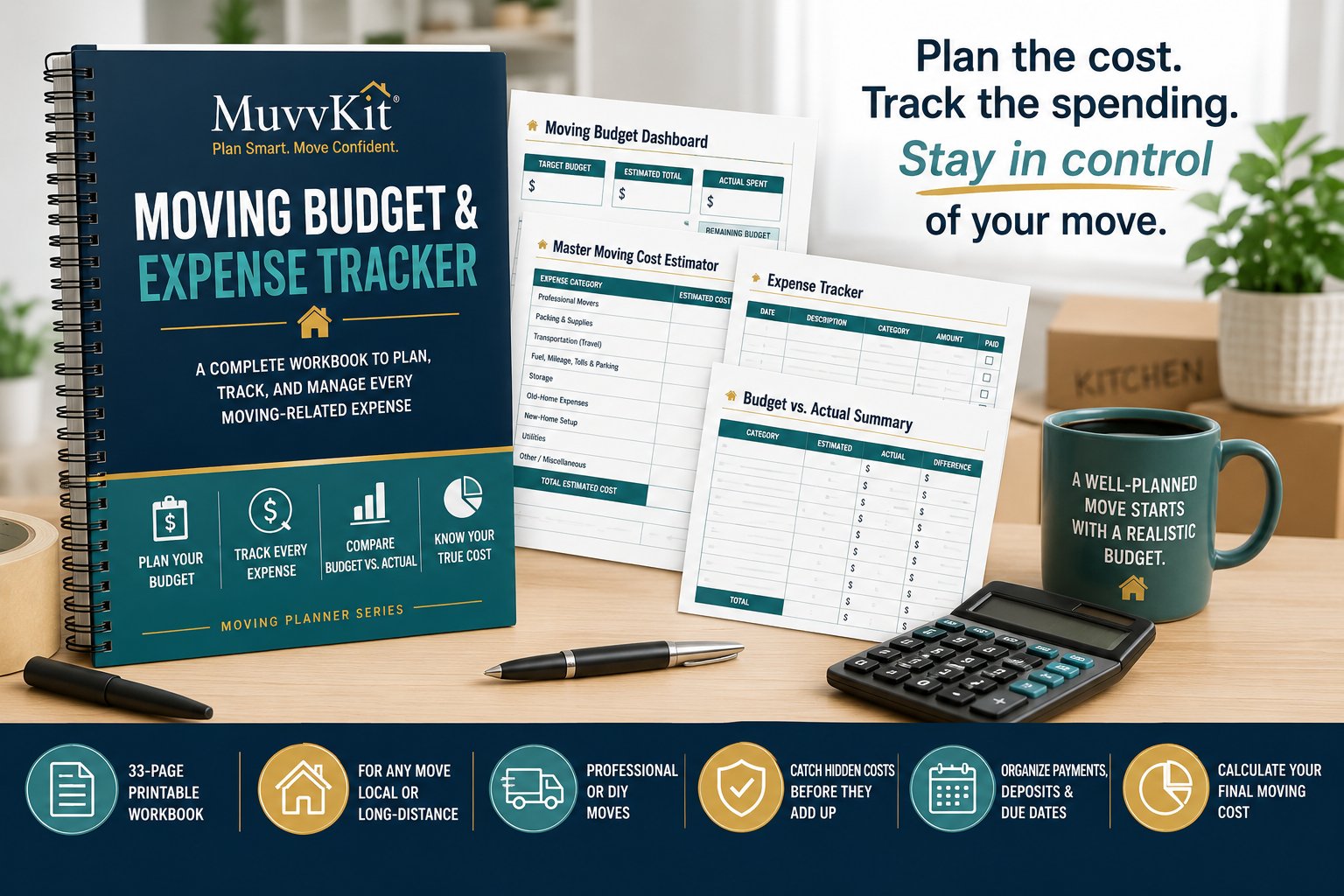
Finish Tracking the Cost of Your Move
Moving expenses do not always stop when the truck is unloaded. You may still have final payments, cleaning costs, travel expenses, household setup purchases or other move-related spending to organize.
The MuvvKit Moving Budget & Expense Tracker can help keep planned and actual moving costs together while you finish closing out your moving budget.
Finish the Remaining Parts of Your Move
Use the resource that matches what is still unfinished.
Complete Moving Planner
Review remaining moving tasks and keep the final stages of your move connected to your overall plan.
Explore the Complete Bundle →Moving Budget Tracker
Finish recording final moving costs and compare your planned expenses with actual spending.
View Budget Tracker →Room-by-Room Packing System
The same room-by-room approach can help you work through remaining boxes in manageable areas.
View Packing System →Moving Day Hub
Review final-walkthrough, essentials and arrival guidance if your moving day is still in progress.
Visit Moving Day Hub →Give Yourself Time to Finish the Move
Settling in does not require every box to disappear immediately. Make your home functional, handle the important updates, work through one area at a time, and allow the remaining organization to happen gradually.
Return to the Plan Your Move HubStart With These After-the-Move Guides
Set up your new home in a manageable order with guidance for the first day, unpacking priorities, address updates, and early household tasks.
Settling-In Guide
After the Move: How to Settle Into Your New Home Step by Step
Follow a practical sequence for getting your household functioning before moving on to less urgent unpacking and organization.
Read the settling-in guideUnpacking Priorities
What to Unpack First After Moving
Prioritize the belongings and household areas that support sleep, meals, hygiene, safety, and the first normal routines.
Choose what to unpack firstFirst-Day Setup
First 24 Hours in a New Home: What to Set Up First
Focus your first day on safety, basic utilities, sleeping arrangements, essential supplies, and immediate household needs.
Plan your first 24 hoursFind more after-the-move guidance for unpacking, utilities, address changes, safety checks, records, and new-home organization.
Read More Settling-In Articles