Moving Packing Supplies Checklist: What You Actually Need
A practical moving packing supplies checklist covering the boxes, tape, cushioning, labels, tools, and optional materials needed for an organized household move.
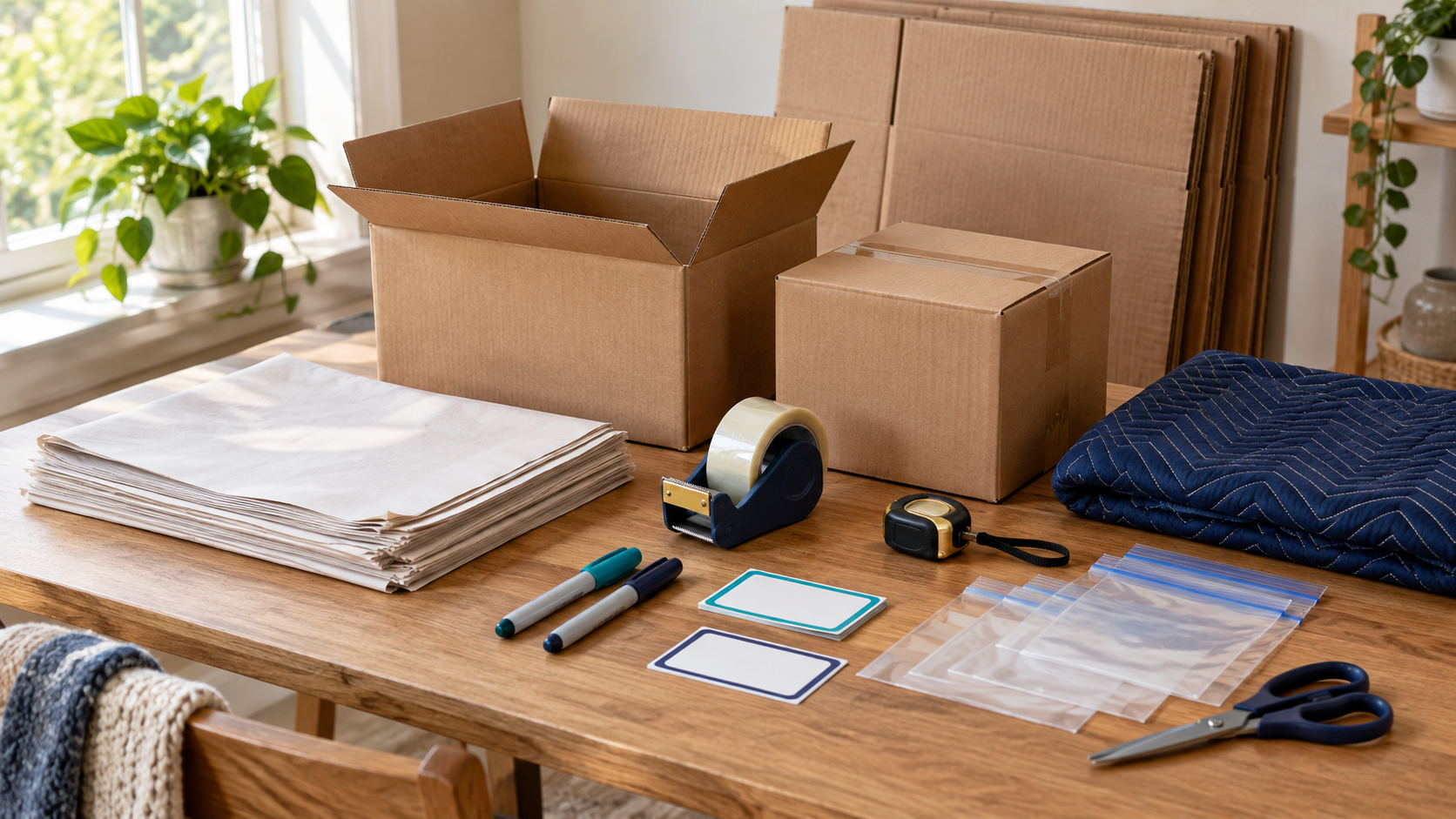
A useful moving packing supplies checklist starts with five jobs: contain, close, cushion, identify, and protect. Most households can cover those jobs with sturdy boxes in several practical sizes, reliable carton-sealing tape, packing paper or another clean cushioning material, markers or labels, resealable bags, and a simple box inventory. Specialty cartons, stretch film, furniture covers, and handling equipment depend on the belongings and the way the move will be transported.
Buy in stages rather than predicting the entire move from room count alone. Inventory the home, test-pack one representative area, and adjust the supply total from what that session actually uses. For the full packing sequence, see How to Pack for a Move: A Room-by-Room Household Packing Guide.
The Short Checklist
For a typical household packing its own belongings, begin with the following core group:
- Small, medium, and larger lightweight-item cartons.
- Carton-sealing tape and at least one comfortable dispenser.
- Clean packing paper and item-appropriate cushioning.
- Permanent markers or printed labels with a consistent identification method.
- Resealable bags for hardware and small parts.
- A box inventory stored somewhere other than on the cartons alone.
- Scissors and a basic measuring tape.
- A limited supply of furniture or mattress protection when the transport plan requires it.
Add specialty materials only after identifying a specific object they will protect. The goal is not to own every packing product. It is to have the correct material available when a defined packing zone begins.
Core Packing Supplies
Sturdy cartons in useful sizes
Use smaller cartons for dense contents and larger cartons for bulky, light belongings. Books, canned pantry goods, tools, and tableware can make an oversized carton difficult to control before the container looks full. Pillows, comforters, lampshades, and lightweight decor can use more volume without the same concentration of weight.
Inspect every reused carton before assigning it a job. The bottom, corners, seams, and walls should remain firm and dry. A box that has softened, torn, absorbed an odor, or lost its shape may be better reserved for donation sorting or recycling than for transport.
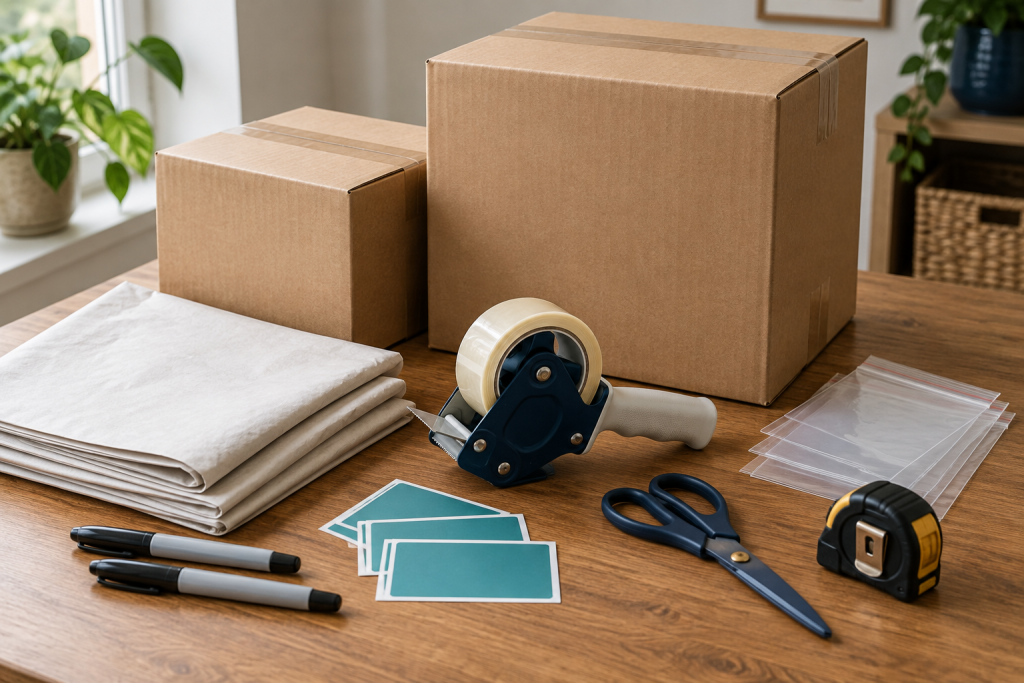
Carton-sealing tape and a dispenser
Choose tape intended to close corrugated cartons rather than general household tape. The tape must adhere to the actual boxes and storage conditions. A dispenser can make repeated sealing easier, but it should feel controllable in the user’s hand. Keep a second roll at the active supply station so a nearly finished box does not remain open when the first roll ends.
Do not substitute decorative masking tape as the structural closure. Colored tape can still serve as a secondary visual code if it adheres well, but the carton should first be closed with suitable sealing tape.
Clean wrapping and cushioning material
Packing paper is versatile because it can wrap surfaces, fill modest empty spaces, and separate pieces. Cellular cushioning, foam, corrugated dividers, and molded inserts can provide more targeted protection for particular objects. Clean towels and linens can sometimes cushion compatible household goods, provided the fabric will not snag, stain, or conceal a part that needs to be found quickly.
Cushioning should address the object’s actual movement and contact points. Filling every hollow space with material is not automatically better if the object is under pressure or the carton becomes unnecessarily heavy. Test the closed carton with a gentle controlled movement; contents should not shift freely.
Markers, labels, and an inventory
A useful label answers three questions: which box is this, where will it go, and what distinguishing contents are inside? Assign a unique code, an arrival room, and a short description. Add a handling note only when it communicates something real, such as the correct upright orientation.
Once the materials are gathered, follow this method for writing, positioning, and recording every moving-box label.
Keep the detailed inventory on paper or in a digital file that remains accessible during the move. If a carton contains private or valuable property, the outside description can remain broad while the inventory holds the useful detail. The labeling method in What Should You Pack First When Moving? works best when the entry is completed as each box is sealed.
Resealable bags and parts control
Small transparent bags are useful for screws, brackets, shelf pins, remote controls, and cords. Use one bag for one item or clearly related assembly. Place the bag in a designated parts container or secure it to the correct component only when the attachment will not damage the surface or become separated in transit.
Photograph a complicated connection before disassembly and give the image the same identifier used for the parts. This turns a loose bag of hardware into a traceable part of the inventory.
Cutting and measuring tools
Keep scissors and a measuring tape at the supply station. A retractable utility knife may be useful for experienced adults, but it needs controlled storage and careful use. Do not leave blades on floors, furniture, or open cartons, and do not allow cutting tools to migrate into children’s packing areas.
Supplies You May Need
Specialty cartons
Wardrobe cartons, dish-cell kits, picture cartons, mirror cartons, television cartons, and lamp boxes solve particular shape or handling problems. They are optional until the inventory identifies a matching need. Measure the object and check the carton specifications before purchasing; a product name alone does not confirm the fit.
Furniture and mattress protection
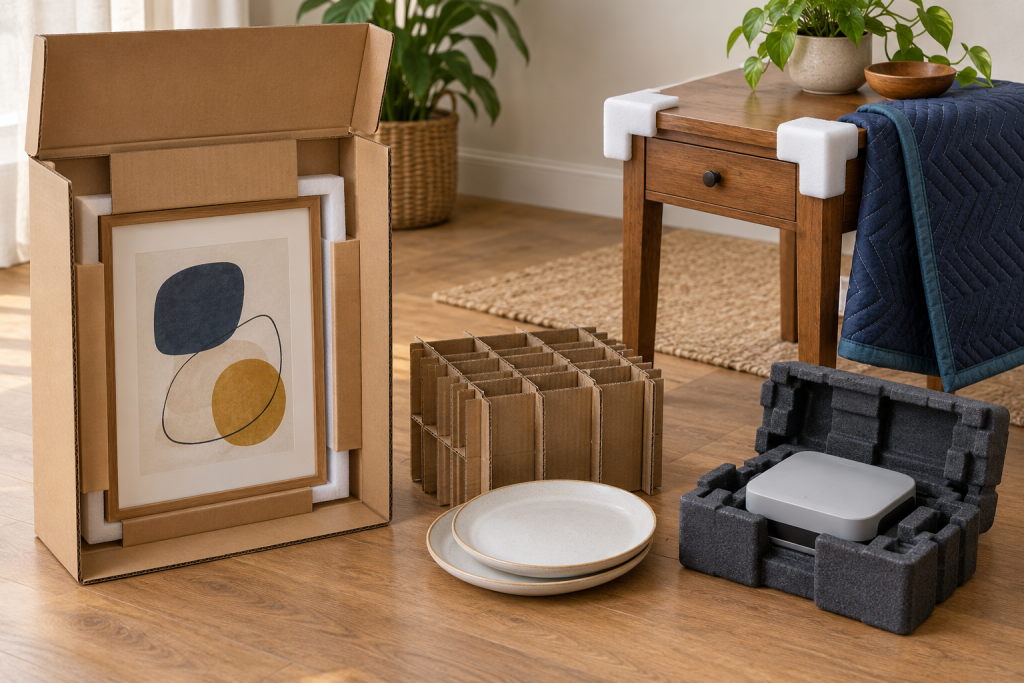
Moving pads, clean covers, corner guards, and mattress bags can protect surfaces from dirt and contact. The correct combination depends on who is handling the furniture, how it will be loaded, and whether the carrier supplies protective materials. Confirm whether professional movers wrap furniture as part of the quoted service before buying duplicates.
Stretch film can hold certain approved protective layers in place, but it is not a universal surface treatment. Check the furniture material and manufacturer guidance. Avoid trapping moisture or applying film directly to a finish that could react, mark, or overheat.
Dividers and object-specific protection
Glassware, dishes, framed pieces, monitors, and other fragile objects may benefit from dividers, corner protection, anti-static materials, or original fitted packaging. Select the system around the object rather than labeling one product as suitable for every breakable item. If an item is unusually valuable or difficult to replace, confirm the mover’s packing and valuation requirements before closing it.
Handling equipment
A hand truck, furniture dolly, lifting straps, ramps, and tie-downs are transport tools rather than ordinary box supplies. Their usefulness depends on the route, surfaces, vehicle, load, and trained help available. Renting may be more practical than purchasing for a single move. Use equipment only within its instructions and rated limits.
How Many Supplies Should You Buy
There is no dependable box total based only on the number of bedrooms. Two homes with the same floor plan can contain very different amounts of books, kitchenware, storage, and decor. A more useful estimate starts with visible categories and storage zones.
- List every room, closet, cabinet group, attic, basement, garage section, shed, and storage unit.
- Mark the dense categories, fragile categories, bulky soft goods, hanging clothes, framed pieces, and electronics.
- Test-pack one representative shelf, cabinet group, or closet section.
- Record the box sizes, tape, paper, and time that the completed sample required.
- Use that result to purchase the next workable supply batch, then revise the estimate as completed inventory grows.
Keep a modest reserve for damaged cartons, late-discovered belongings, and final kitchen or linen items. A reserve is different from buying a large unverified surplus. Store receipts and review return conditions before opening bundled materials that may not be needed.
Build One Packing Supply Station
Choose one accessible location that does not block an exit or working room. Keep tape, paper, labels, markers, bags, scissors, and the current inventory together. Store collapsed cartons upright and dry. Move only the supplies needed for the active zone, then return them when the session ends.
A portable caddy can hold small tools, while bulk materials remain at the main station. This arrangement makes missing supplies visible and reduces the number of half-used tape rolls and markers scattered around the home.
Schedule the supply station before the main packing period begins. When Should You Start Packing for a Move? explains how to place early packing sessions on the household calendar.
Connect Your Supplies to Each Room
The MuvvKit Room-by-Room Packing System provides a structured place to plan packing tasks, labels, and box contents across the home.
View the Room-by-Room Packing SystemWhat You Probably Do Not Need
Skip any product that does not have an assigned packing job. Common sources of unnecessary purchasing include:
- A single oversized carton type for the entire home.
- Specialty boxes purchased before measuring the objects.
- Several competing label systems that repeat the same information.
- Large quantities of cushioning bought before a sample area is packed.
- Furniture protection already included in a professional packing or loading service.
- Handling equipment that nobody is prepared or permitted to use.
- Decorative organizers that create another transfer step without improving protection or identification.
It is also unnecessary to replace every sound reused carton simply to make the shipment look uniform. Consistency matters most in closure, safe handling, identification, and stackability—not appearance.
Adjust the Checklist to the Type of Move
Professional moving service
Ask what the crew provides, what customer-packed cartons must look like, and which belongings the mover will not accept. Confirm specialty-item preparation, mattress and furniture protection, disassembly, labeling, and the treatment of open or reused cartons in writing.
For an interstate household-goods move, consult the Federal Motor Carrier Safety Administration Protect Your Move program for current consumer information. The mover’s tariff, estimate, order for service, bill of lading, and written packing instructions—not a general supply article—govern the actual service arrangement.
DIY truck or trailer move
The supply plan extends beyond cartons. The household may need moving pads, tie-downs, load-securing equipment, a suitable ramp, and approved handling devices. Match each product to the vehicle and follow its instructions. Do not improvise a load-restraint system from packing tape or household cord.
Container or storage move
Boxes may remain closed longer and encounter temperature or humidity changes. Use dry, sound cartons, protect the inventory record, and confirm the provider’s prohibited-items and loading rules. Do not assume a sealed plastic covering makes a moisture-sensitive item safe for long-term storage.
Small apartment or short-distance move
A smaller supply batch can preserve floor space and reduce leftovers. Reusable totes may be practical when they can be returned or used after arrival, but confirm their shape, closure, carrying points, and compatibility with the vehicle. Keep walkways and building access clear as finished containers accumulate.
Keep These Items Out of the General Supply Pile
Packing materials should not swallow the belongings needed to complete the move. Create a separate travel-and-arrival group for identification, keys, medicine, essential devices, chargers, current paperwork, payment methods, valuables, and immediate care supplies. Keep the materials for that group visually separate from boxes intended for loading.
A first-night moving essentials kit should be assembled as a distinct arrival resource, not used as a convenient place to store extra tape and miscellaneous packing tools.
Frequently Asked Questions
What are the absolute essentials for packing a move?
Most self-packing households need sound containers, suitable sealing tape, clean wrapping or cushioning material, a labeling method, a separate inventory, small-parts bags, scissors, and a measuring tape. The belongings and transport method determine everything added to that core.
Should I buy boxes or use free boxes?
Either can work when the cartons are clean, dry, rigid, closable, and suitable for the contents. Reused boxes vary more in strength and shape, so inspect them individually. A professional mover or storage provider may impose additional conditions on customer-packed or reused containers.
Is bubble cushioning necessary for moving?
Not for every object. Clean paper, dividers, fitted packaging, foam, fabric, or cellular cushioning may be appropriate depending on the surface, shape, weight, and sensitivity of the item. Choose protection based on the object rather than applying one material throughout the home.
How much packing tape do I need?
A universal roll count is unreliable because carton size, closure method, tape length, and repacking all vary. Seal a representative group of boxes, record the tape used, and purchase the next batch from that evidence. Keep one unopened reserve roll available during final packing.
Do movers provide packing supplies?
Some services include materials, some charge for what is used, and others expect customer-packed boxes to be ready. Request the included materials and charges in writing. Confirm the answer before purchasing furniture pads, specialty cartons, or mattress protection that may already be part of the service.
What size moving boxes should I get?
Use smaller cartons for dense belongings, medium cartons for mixed household goods, and larger cartons for bulky lightweight items. Specialty shapes should follow measured objects. Always check the box specifications and keep the finished container within the handler’s safe capability.
Final Takeaway
Start with supplies that perform a defined job: sturdy cartons, reliable sealing tape, clean cushioning, clear identification, parts control, and an accessible inventory. Add specialty protection only after the belongings and transport method show that it is needed.
Inventory first, test-pack a representative area, and purchase in workable batches. This creates a supply plan based on the actual household rather than a generic box total, while leaving room to adapt as packing progresses.
Need a Coordinated Set of Moving Boxes?
Review the dimensions, quantities, materials, and return terms before deciding whether a packaged box kit fits your household inventory.
View the Moving Box Kit on AmazonAs an Amazon Associate, MuvvKit earns from qualifying purchases.
References and Resources
Editorial Note: The source below was selected for official federal consumer information concerning interstate household-goods moves. This article provides general informational guidance. Its five-job supply model, staged-purchasing method, sample-area estimate, and supply-station system are original MuvvKit editorial frameworks rather than official requirements. Product specifications, mover policies, included services, charges, transport restrictions, and local requirements can change. Verify current information with the relevant mover, provider, contract, manufacturer, retailer, or public authority.
Federal Motor Carrier Safety Administration – Protect Your Move. Official consumer resources for interstate household-goods moves.