What to Pack in a First-Night Moving Essentials Kit
Moving day doesn’t end when the boxes arrive. Learn what to keep accessible in a first-night moving essentials kit, from medications and documents to bedding, toiletries, chargers, food, and household basics.
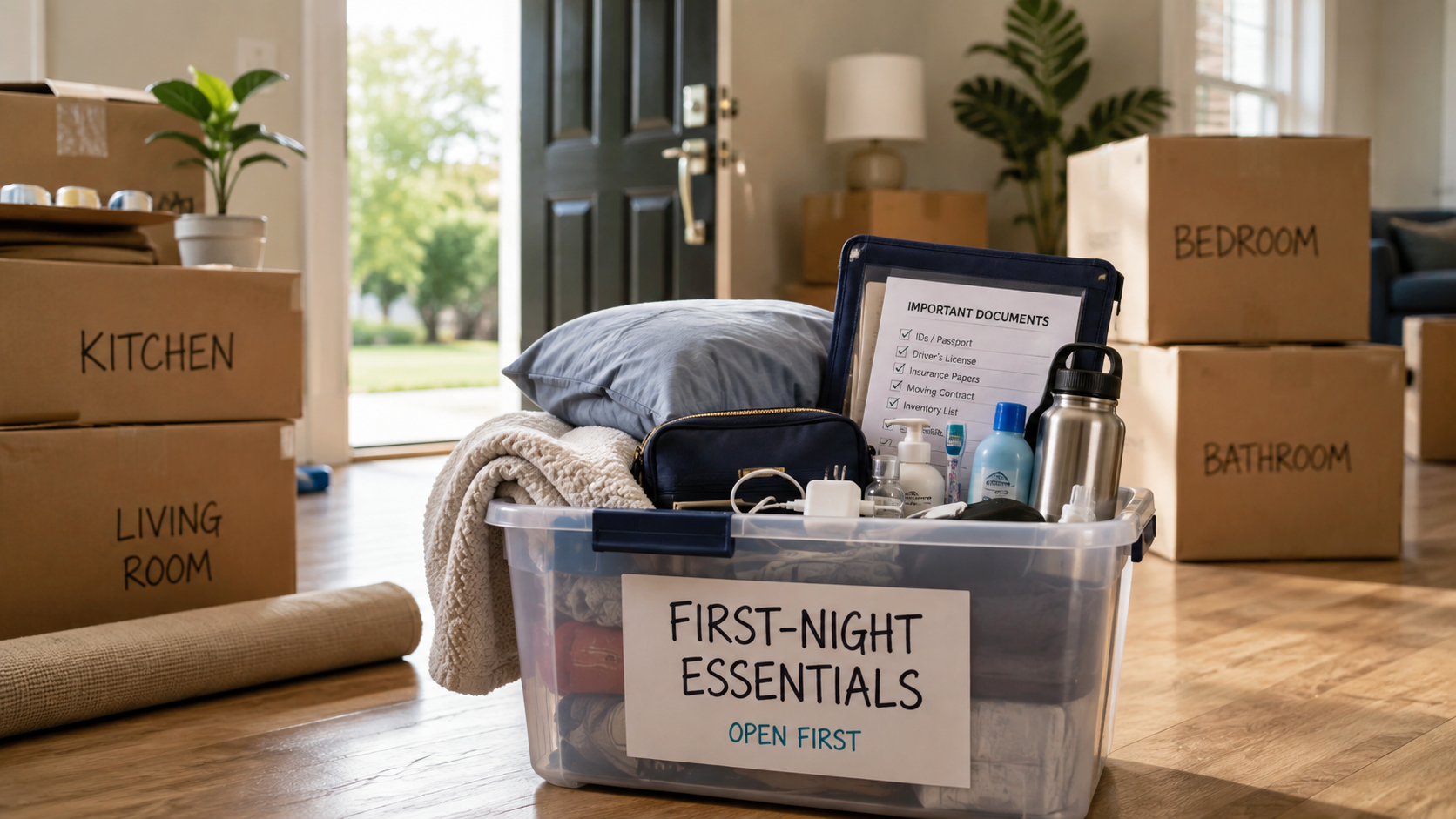
Moving day does not end when the last box crosses the threshold. Before a household can begin normal unpacking, people still need to eat, charge devices, use the bathroom, take medications, make a bed, care for children or pets, and handle basic cleanup. A first-night moving essentials kit keeps those immediate needs separate from the general shipment.
Before assembling the arrival kit, identify what can be packed early and what must remain accessible through moving day.
The simplest way to build the kit is to think in terms of the first 24 hours rather than an entire household. Pack what you will need during the trip, at arrival, before bed, and the next morning. Keep those items clearly identified and easy to reach, rather than burying them among ordinary moving boxes.
For many households, one container is not enough. A practical setup may include a personal overnight bag for each person, a shared household essentials box, and a separate folder or bag for documents and other items that should stay under your control. The goal is accessibility, not fitting everything into a single carton.
What Is a First-Night Moving Essentials Kit?
A first-night moving essentials kit is a small group of belongings reserved for moving day and the first night in the new home. You may also hear it called an open-first box, first-night box, moving-day bag, or essentials box.
Unlike ordinary packed belongings, these items should remain easy to identify throughout the move. The kit should cover immediate personal care, sleep, communication, basic food and drink, simple cleanup, and household-specific needs. It should not become a substitute for unpacking or a catchall for everything that feels important.
The essentials kit is one part of the larger day-of plan. This moving day checklist explains when to separate it, how to protect the no-load zone, and what to confirm before leaving the old home.
A useful test is straightforward: if the moving truck were delayed, or if you chose not to unpack ordinary boxes until the next morning, what would your household need to function safely and reasonably? Those items belong in the first-night plan.
Separate Personal Carry-With-You Items From the Household Box
Not every essential belongs in the same container. Some belongings need continuous access or closer control than a shared household box provides.
The essentials kit should be assembled and moved into a protected no-load area during the final week. The guide to preparing during the week before moving day explains how that task fits with packing, access, paperwork, and property preparation.
Keep identification, keys, payment methods, essential medications, glasses or contact-lens supplies, phones, critical documents, and other personally important items with the appropriate household member. If professional movers are transporting the shipment, keep the mover’s paperwork accessible as well. FMCSA’s interstate moving checklist tells consumers to retain the bill of lading until delivery, payment, and any claims are resolved.
High-value belongings also deserve deliberate handling. FMCSA defines a high-value article for interstate household-goods purposes as an item worth more than $100 per pound and advises consumers to make movers aware of high-value items. Review your mover’s procedures and valuation terms rather than assuming that an ordinary essentials carton is the right place for valuable property.
Keep the kit outside the shipment as the final evening approaches. The guide to preparing the day before moving explains how to secure the no-load area and connect first-night supplies with documents, keys, and travel items.
The personal carry group supports the transition into the new home. Once delivery is complete, use this guide to the first boxes to unpack after moving to set up sleep, hygiene, food, medication, chargers, and other immediate routines.
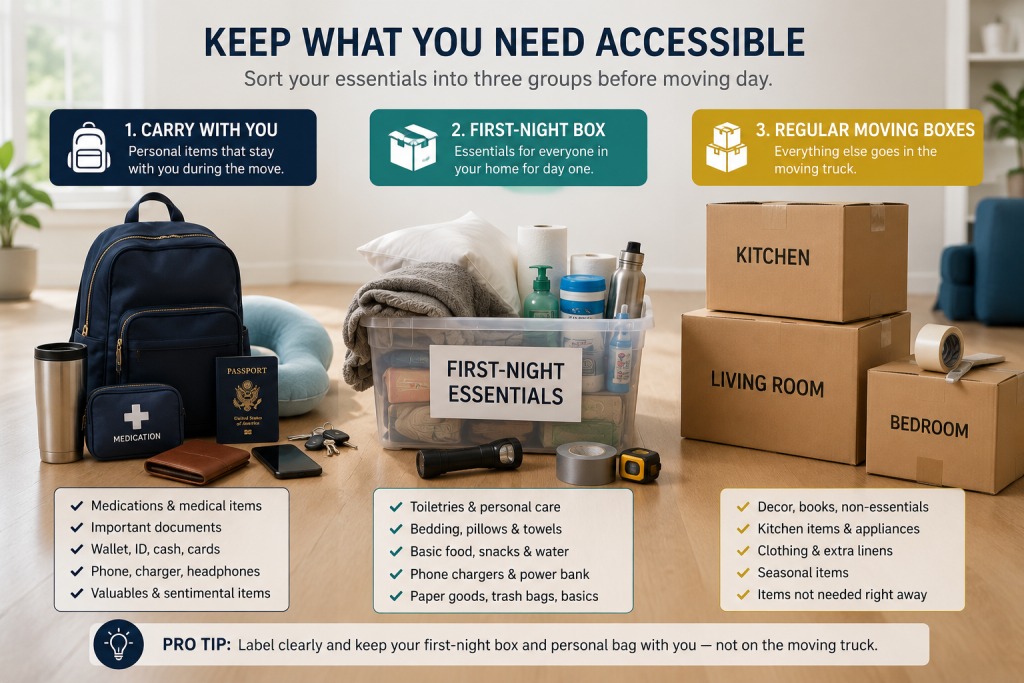
Travel records and first-night supplies should remain under household control rather than entering the shipment. Use this list of documents to keep with you when moving to separate sensitive records from the general essentials kit.
1. Pack Medications and Everyday Health Items First
Start with items that cannot easily wait until a box is found. Pack prescription medications, routinely used over-the-counter items, glasses, contact lenses and supplies, hearing-device supplies, and other everyday health necessities according to the needs of the household.
Keep necessary medication accessible during travel rather than placing it deep in the household shipment. If the move includes air travel, review current Transportation Security Administration rules before departure. TSA allows medications through security screening and provides specific guidance for medically necessary liquids and related cooling accessories.
A compact first-aid assortment can also be useful for minor cuts or scrapes during unpacking. Keep this limited to familiar basic supplies rather than turning the first-night kit into a large medical cabinet.
2. Set Aside Identification, Keys, and Moving Documents
Moving day creates a steady flow of documents, addresses, confirmation numbers, keys, and contact information. Keep these materials together instead of scattering them among boxes or bags.
Depending on the move, this group may include photo identification, new-home keys, lease or closing information, mover paperwork, insurance information, reservation details, utility contact information, parking or building instructions, and a written or offline copy of important phone numbers.
For an interstate professional move, read completed documents before signing and keep the bill of lading available. FMCSA also recommends knowing how to contact the mover or broker before, during, and after the move. A slim document folder or zippered pouch can keep these papers separate from toiletries, food, and cleaning supplies.
3. Pack Phones, Chargers, and Basic Power Needs
Phones often serve as maps, communication tools, cameras, payment devices, reservation records, and contact lists on moving day. Pack the correct charging cable for each device that the household expects to use immediately.
A charged portable power bank can provide another option when outlets are inconvenient or power is not yet available where you need it. Ready.gov also recommends alternative charging methods as part of preparedness planning. If you pack a power strip or extension cord, use it only within its ratings and follow the manufacturer’s instructions.
Keep work devices accessible only when they are genuinely needed during the transition. Otherwise, reducing the number of electronics in the first-night kit makes the kit easier to manage.
4. Prepare a Basic Bathroom Kit
The bathroom is one of the first rooms a household may need after arrival. Pack toilet paper, hand soap, toothbrushes, toothpaste, deodorant, basic shower supplies, towels, and other personal-care items used every day.
Check the new bathroom before moving day when possible. A shower that requires a curtain, rings, or another removable accessory may not be usable until those items arrive. Packing the needed pieces with the bathroom essentials can prevent an unnecessary search through general household boxes.
Keep liquids sealed and separate from papers, electronics, and clothing. A small waterproof or wipeable toiletry bag can make leaks easier to contain.
5. Keep One Night of Bedding Accessible
After a full moving day, setting up a place to sleep usually matters more than unpacking decorative or storage items. Reserve the bedding needed for the first night rather than packing all linens together.
The exact set depends on where everyone will sleep, but it may include sheets, pillows, pillowcases, blankets, sleeping bags, or bedding for an air mattress. If a bed frame requires assembly before use, keep its hardware clearly labeled and accessible rather than mixing it with unrelated fasteners.
Pack sleepwear and the next day’s clothing in personal overnight bags. This keeps clothing needs separate from the larger bedroom cartons and reduces the need to begin unpacking wardrobes late in the day.
6. Plan Simple Food, Water, and Eating Supplies
The first-night kit does not need to recreate a complete kitchen. Plan for simple food and drinks based on the travel schedule, expected arrival time, dietary needs, and whether stores or restaurants will be practical after arrival.
Shelf-stable snacks, drinking water, a few cups, plates or bowls, utensils, napkins, and a can or bottle opener may be enough for some households. If you expect to prepare food, keep the plan minimal until the kitchen is properly unpacked and cleaned.
Use extra care with perishable food. USDA food-safety guidance says cold perishable food should remain at 40°F or below. When transporting perishables, use an insulated cooler with enough ice or frozen gel packs to maintain a safe temperature. Food that cannot be kept within safe temperature limits may be better used before the move, discarded appropriately, or replaced after arrival.
7. Add a Small Cleaning and Waste-Handling Set
Even a clean new home can produce immediate moving-day mess: packing material, dust, spills, empty bottles, tape backing, and discarded paper. A small cleanup set can handle the first evening without opening the full household cleaning supply boxes.
Consider paper towels or reusable cloths, trash bags, hand soap, and a basic cleaner appropriate for the surfaces in the home. A small broom and dustpan can help if they are easy to transport.
Do not automatically place household chemicals into an ordinary moving box. Products such as some cleaners, fuels, paints, pesticides, and other hazardous materials can require special handling. Review product labels and mover restrictions before transportation.
8. Keep a Few Unpacking Tools Within Reach
The first evening may require opening cartons, tightening a loose screw, assembling a simple item, or labeling something that needs attention later. A very small tool set can support those tasks.
Useful choices may include scissors, a marker, tape, a screwdriver appropriate for the furniture being assembled, and a flashlight. If you use a box cutter, store it securely and keep it away from children. Cut away from your body and avoid reaching blindly into cartons where the blade could damage belongings.
Do not overload the essentials kit with a full workshop. Pack only tools you reasonably expect to use during arrival and the first round of unpacking.
Keep Moving Day Organized
The MuvvKit Moving Day Command Sheets help you keep important tasks, household details, loading-day information, and moving-day responsibilities organized in one practical place.
Explore the Moving Day Command Sheets9. Customize the Kit for Children
Children may need more than the household basics during a long moving day. Build their first-night items around feeding, hygiene, sleep, school or travel requirements, and familiar routines.
Depending on age, that may include diapers or training supplies, wipes, formula or feeding equipment, a change of clothing, pajamas, a favorite comfort item, age-appropriate snacks, and a small activity. Keep necessary medications and identification with the responsible adult rather than inside a child’s general box.
Avoid packing every toy or book as an essential. A small number of familiar items can support the transition while keeping the first-night load manageable.
10. Customize the Kit for Pets
Pets also need a separate arrival plan. Keep the items required for safe transport and the first night readily accessible.
Depending on the animal, that may include food, water, bowls, a leash or harness, carrier, litter and litter supplies, waste bags, bedding, and familiar comfort items. Keep medications and veterinary information accessible when relevant.
Set up a secure area before opening exterior doors repeatedly for unloading. Moving activity can create unfamiliar noise, people, and open exits, so household members should know where the pet will stay while boxes and furniture enter the home.
11. Consider Weather, Travel Time, and Arrival Conditions
A short local move and a multi-day interstate move do not require identical essentials. Adjust the kit to the actual route and arrival conditions.
Hot or cold weather may change clothing and hydration needs. A late arrival can make flashlights more useful. A building with an elevator reservation may require access credentials or written instructions. An overnight stop may mean packing the essentials more like travel luggage than a household box.
If the shipment may arrive after you do, expand personal luggage enough to cover the expected gap. Keep the distinction clear: the first-night kit supports immediate arrival, while travel luggage covers the period before the rest of the household goods become available.
The kit should remain accessible through delivery and the first evening. Use the first-night new-home checklist to connect those supplies with access, utilities, alarms, sleeping areas, food, and security.
How to Organize the First-Night Kit
A good essentials kit should be recognizable without reading every carton label. Use a container, bag, or labeling method that clearly distinguishes it from ordinary moving boxes. Mark it on more than one side so the label remains visible when boxes are stacked.
Separate the contents by function. Personal overnight bags can hold clothing and toiletries. A shared household box can hold toilet paper, basic eating supplies, cleaning items, and simple tools. A document pouch can hold moving paperwork and information that needs closer control.
Before loading begins, tell anyone helping with the move which containers must remain accessible. If you are using professional movers, do not leave a clearly marked personal-access container in the loading path where it could be added to the general shipment by mistake.
Pack It Last – But Do Not Treat Every Item the Same
The phrase ‘pack it last’ is useful for an open-first household box because late loading can make a carton easier to retrieve during a DIY move. However, the better rule is to control access intentionally.
Items such as identification, medications, keys, phones, critical documents, and travel necessities should stay with the household rather than depend on where a carton sits inside a loaded vehicle. A household essentials box can remain separately accessible, while ordinary belongings follow the normal loading plan.
Before departure, confirm who has the keys, documents, medications, phones, chargers, and first-night containers. That final check is more reliable than assuming a particular box made it into the correct vehicle.
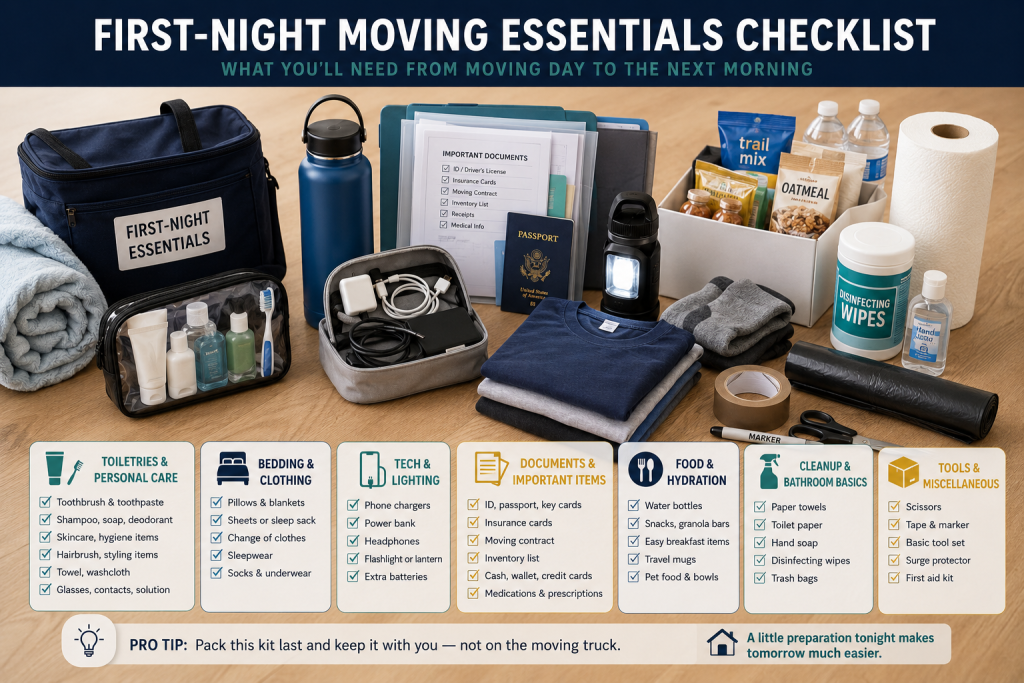
A Practical First-Night Moving Essentials Checklist
Use this checklist as a starting point and remove anything your household will not need. The goal is a small, deliberate set of accessible belongings.
- ☐ Identification and new-home keys
- ☐ Moving, lease, closing, reservation, or building documents needed during arrival
- ☐ Essential medications and routine health items
- ☐ Glasses, contacts, hearing-device supplies, or other daily aids
- ☐ Phones, charging cables, and a charged power bank if useful
- ☐ Toilet paper, hand soap, toothbrushes, toothpaste, and basic toiletries
- ☐ Towels and any shower accessory needed immediately
- ☐ One night of bedding and sleepwear
- ☐ Next-day clothing
- ☐ Water and simple food or snacks
- ☐ Basic cups, utensils, napkins, and an opener if needed
- ☐ Cooler and cold sources when transporting perishable food
- ☐ Trash bags, paper towels or cleaning cloths, and a basic surface-appropriate cleaner
- ☐ Scissors, marker, tape, flashlight, and a few necessary hand tools
- ☐ Child-specific feeding, hygiene, sleep, and comfort items
- ☐ Pet food, water, bowls, restraint or carrier, cleanup supplies, and medications as needed
- ☐ Weather- or route-specific items needed before normal unpacking begins
What Should Stay Out of the First-Night Box?
An essentials kit works best when it remains limited. Decorative items, large quantities of clothing, duplicate toiletries, full cookware sets, extensive cleaning supplies, and belongings intended for later rooms can stay with the normal shipment.
Avoid using the box as a place to hide valuables simply because it will remain accessible. Decide separately how to handle jewelry, financial documents, irreplaceable records, electronics, and other valuable property. When professional movers are involved, review the mover’s terms and FMCSA guidance for high-value articles.
Also keep hazardous or restricted materials out of the essentials box unless you have confirmed that your transportation method permits them and you can transport them safely.
First-Night Kit vs. Open-First Boxes
A first-night kit and an open-first box can overlap, but they do not have to be identical. The first-night kit covers immediate personal and household needs. Open-first boxes can support the first stage of unpacking by room.
For example, a bathroom open-first box might contain extra towels and bathroom setup items, while the personal overnight bag contains the toiletries needed before bed. A kitchen open-first box might hold a small group of everyday dishes and cookware, while the essentials kit contains only what is needed for the first meal or morning.
This distinction keeps the first-night kit portable while still giving the household a clear sequence for beginning to unpack.
Use the Kit to Bridge Moving Day and Unpacking
The first-night moving essentials kit is a transition tool. It should carry the household from the final hours at the old home through travel, arrival, sleep, and the next morning without requiring immediate access to every packed room.
Build it around actual routines. Protect access to medications, identification, documents, communication, hygiene, sleep, food, and household-specific needs. Then keep the kit separate from ordinary boxes and make sure everyone involved in the move knows where it belongs.
Once the first night is over, unpack by priority rather than letting the essentials kit become permanent storage. The kit has done its job when normal household systems begin taking over again.
Frequently Asked Questions
What should I pack in a first-night moving essentials kit?
Pack what your household needs for the trip, arrival, bedtime, and the next morning. Typical categories include medications, identification and documents, chargers, toiletries, towels, bedding, a change of clothes, simple food and water, basic cleaning supplies, a few unpacking tools, and items needed by children or pets.
Should the first-night box go on the moving truck?
Keep access under your control. For a DIY move, an open-first household box may travel where you can retrieve it easily. Identification, medications, keys, critical documents, phones, and travel necessities should remain with the household rather than depend on access to the general shipment.
How many days should an essentials kit cover?
For a straightforward local move, planning around the first 24 hours is often enough. If travel takes multiple days or the household-goods shipment may arrive later, expand personal luggage to cover the expected gap. Keep the first-night kit focused on arrival rather than turning it into a replacement for normal luggage.
Should I make one essentials box or one for each person?
Either can work, but separating personal and shared needs is often easier. Each person can have a small overnight bag, while one shared box holds bathroom, food, cleanup, and unpacking supplies. Keep important documents and controlled-access items in a separate folder or bag.
Can I pack food in the first-night kit?
Shelf-stable food is generally easier to manage. If you transport perishable food, follow food-safety requirements. USDA guidance calls for keeping cold perishable foods at 40°F or below, typically with an insulated cooler and adequate cold sources during transportation.
What should I pack for children and pets?
Pack around immediate routines: feeding, hygiene, medications, sleep, safe transportation, and a small number of familiar comfort items. For pets, plan a secure arrival area before unloading creates repeated open-door traffic.
When should I pack the first-night essentials kit?
Set items aside during the final stage of packing, then complete the kit before loading begins. Do a final check immediately before departure so medications, keys, documents, phones, chargers, and overnight items are in the correct vehicle or bag.
Continue With the Complete Moving Day Guide
Your first-night essentials are only one part of a well-organized moving day. Continue with MuvvKit’s Moving Day Guide for practical guidance on what to do before loading begins, while the move is underway, and after your belongings arrive at the new home.
Read the Moving Day GuideReferences & Sources
- Federal Motor Carrier Safety Administration – Moving Checklist
- Federal Motor Carrier Safety Administration – Protect Your Move: Plan It – Pack It
- Federal Motor Carrier Safety Administration – Glossary
- Transportation Security Administration – TSA Travel Tips
- Ready.gov – Plan Ahead for Disasters
- USDA Food Safety and Inspection Service – Grilling and Food Safety (Transporting Food)
- USDA Food Safety and Inspection Service – Refrigeration & Food Safety
Editorial Note: MuvvKit uses authoritative government and public-safety sources to verify factual, safety, transportation, and food-handling information included in its moving guides. The first-night essentials categories, packing sequence, and organizational approach presented in this article are MuvvKit editorial guidance designed to help households keep commonly needed belongings accessible during moving day and the first night after arrival. Individual needs may vary based on household circumstances, transportation method, travel plans, mover requirements, and local regulations. Always follow current instructions from your moving company, product manufacturers, transportation providers, and applicable government agencies when specific safety or regulatory requirements apply.