The Best Room-by-Room Order for Packing a Home
Packing a home is easier when you work from low-use spaces toward everyday essentials. Follow a practical room-by-room packing order that keeps your household functional as moving day approaches.
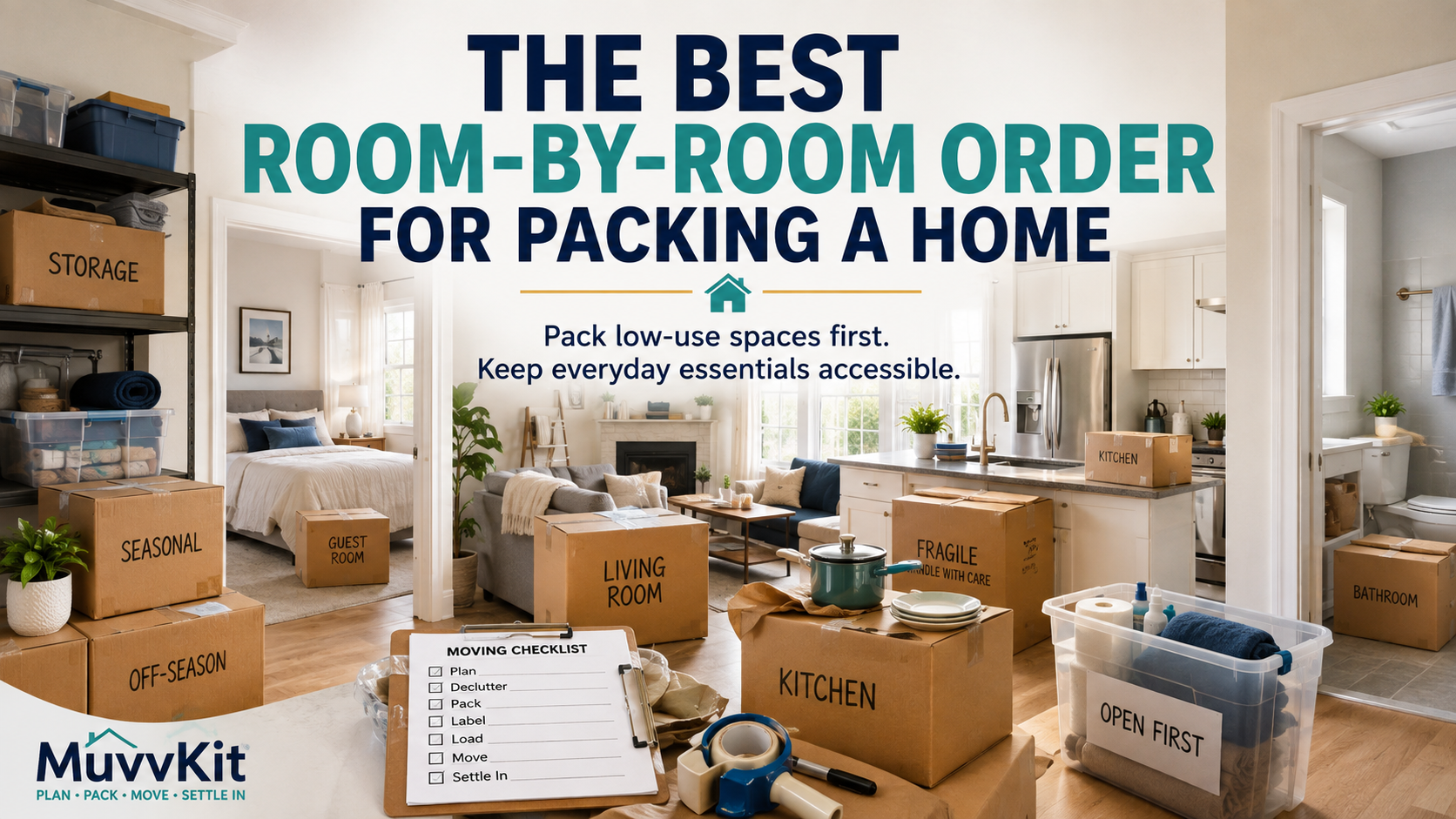
Packing a home usually feels easier when you organize rooms by how often you use their contents rather than by the home’s floor plan. Start with low-use spaces. Keep rooms that support daily routines functional for longer.
Room order is only one part of the decision. Within each space, use an availability-based packing order to separate early-pack items from belongings that must remain in use.
That creates a practical room-by-room packing order: begin with storage and seldom-used areas, move through secondary rooms and decorative spaces, then pack bedrooms and living areas in stages. Leave the kitchen, bathrooms, everyday work areas, and open-first essentials until later.
The order of the rooms is only one part of the plan. Your household size, schedule, and amount of stored property also affect how early you should start packing.
Every household may need a slightly different sequence. For example, treat a guest room that doubles as a daily office like an active workspace, not an unused spare room. The most useful principle is simple: pack what you use least first and protect the routines you still need before moving day.
Start with a quick whole-home setup
Before closing boxes in the first room, establish a packing system you can repeat throughout the home.
Decide what is actually moving. Packing unwanted belongings creates extra work now and extra unpacking later. Separate items to donate, sell, recycle, discard, or handle outside the normal shipment before they enter moving boxes.
Create a central supply area with boxes, packing paper or other protective material, tape, labels, markers, and any room-specific supplies you expect to use.
Choose a labeling method before you seal the first box. At minimum, write the destination room and a short description of the contents. If you plan to number boxes or keep an inventory, start that system immediately instead of adding it halfway through the move.
Finally, set aside belongings that need to stay accessible or travel separately. This group may include identification, important records, medications, keys, chargers, valuables, and anything you expect to need during travel or on the first night.
A practical room-by-room packing order
Prepare one central supply station using the core packing materials required for each room, then add specialty protection only where the inventory calls for it.
For many homes, the following sequence works well:
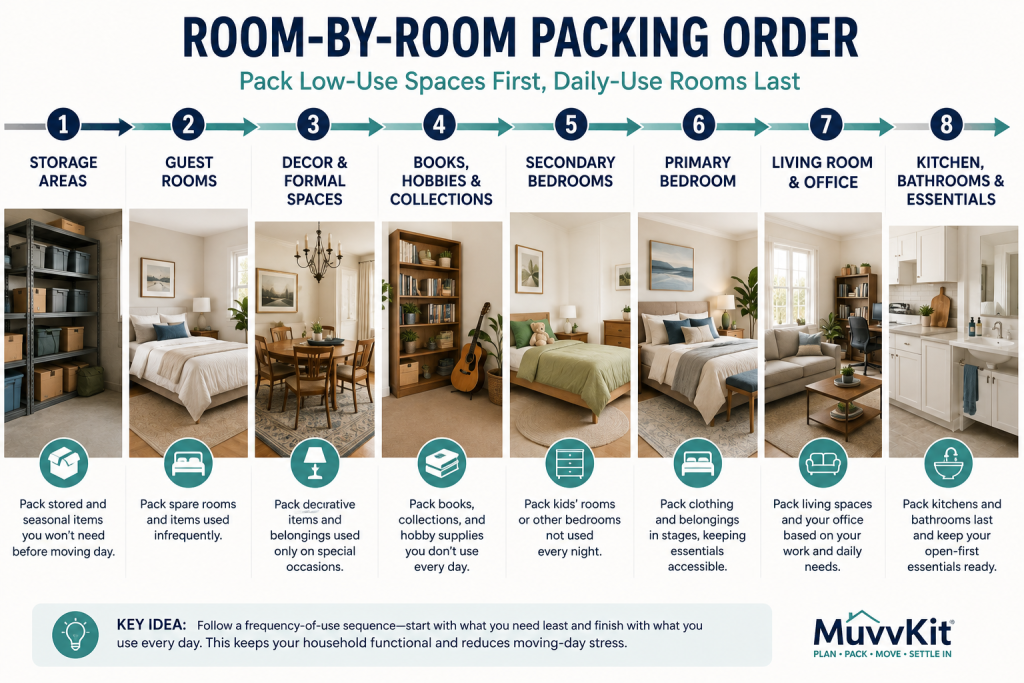
Use those same destination names when you label boxes for unloading and unpacking so helpers can route each carton without interpreting room nicknames.
1. Storage areas and seasonal belongings
2. Guest rooms and other low-use rooms
3. Decorative and formal spaces
4. Books, collections, and hobby areas
5. Secondary bedrooms
6. Primary bedroom, packed in stages
7. Living and family rooms
8. Home office, packed around work needs
9. Kitchen, packed in stages
10. Bathrooms
11. Everyday essentials and open-first items
Use this sequence as a framework, not a rule. Move any room that serves an essential daily purpose later in the schedule. Move a normally busy room earlier only when your household no longer needs it before moving day.
1. Begin where everyday life is least likely to be interrupted
Spaces that mainly hold overflow belongings often make practical starting points. Think about an attic with holiday decorations, basement shelves, a little-used hall closet, or cabinets that hold extras rather than daily necessities.
Do not treat these spaces as a simple box-filling exercise. Use the first pass to decide which belongings deserve space in the new home. Long-stored possessions often make this review easier because they can reveal things the household no longer uses.
After that review, box the low-priority belongings that will definitely move. Depending on the household, this group might include seasonal decorations, equipment used only part of the year, reserve linens, keepsakes, archived household materials, or other items you can leave closed until after arrival.
Review garages, sheds, utility rooms, and similar spaces carefully before you seal anything. These areas can hold paints, solvents, fuels, pesticides, pressurized containers, automotive fluids, and other products that may not belong in a normal household-goods shipment. The U.S. Environmental Protection Agency explains that some common household products can create fire, corrosion, reaction, or toxicity hazards and may require appropriate local handling or disposal. FMCSA guidance also addresses hazardous materials in interstate household-goods transportation.
When you find an unfamiliar or potentially hazardous product, identify it first and decide how to handle it before you place it with ordinary packed belongings.
2. Move next to guest rooms and other low-use rooms
A rarely used guest room usually makes an easier early target than a bedroom someone sleeps in every night.
Pack decor, spare bedding, extra pillows, books, unused clothing, and furniture accessories. When guests will stay before the move, delay the final packing so the room remains usable until they leave.
The same principle applies to other low-use spaces such as a formal sitting room, extra den, or rarely used dining room. Their position in the packing order depends on actual household use, not the room’s label.
3. Pack decorative and formal spaces before everyday living areas
You can often pack wall decor, display pieces, seasonal tableware, decorative objects, and formal entertaining items before practical daily-use belongings.
This stage is useful because it reduces visual clutter and clears surfaces without making the home difficult to live in.
Group framed art, mirrors, delicate decor, and unusually fragile objects by room, then protect each item appropriately. Do not put a fragile piece into an ordinary box just because you have already packed the rest of the room.
4. Pack books, collections, and hobby areas
You can usually reduce bookshelves, craft rooms, game collections, music areas, and hobby supplies early when you will not use those activities during the final weeks.
Keep weight in mind. Smaller boxes make books and other dense objects easier to carry than oversized cartons.
For hobby supplies, review the contents before packing. Paints, adhesives, solvents, fuels, aerosols, batteries, or other products may need separate handling depending on the product and transportation method.
If the hobby remains part of your daily routine, leave out a small working set and pack the rest.
5. Pack secondary bedrooms
Secondary bedrooms often come next, including children’s rooms and other occupied bedrooms, but pack them gradually instead of stripping them all at once.
Start with out-of-season clothing, books you will not use before the move, decor, collectibles, spare bedding, and belongings from under-bed or closet storage.
Keep enough clothing, bedding, school or work materials, chargers, comfort items, and daily necessities available for the remaining time in the home.
For children, preserving familiar routines may be more useful than finishing the room early. The packing order should support the household, not make the final days unnecessarily disruptive.
6. Pack the primary bedroom in stages
The primary bedroom combines low-use belongings with items you need until moving day, so pack it in layers.
Pack first:
- Off-season clothing
- Extra shoes and accessories
- Decorative items
- Spare bedding
- Books and nonessential personal items
- Closet contents not needed before the move
Leave for later:
- A practical rotation of clothing
- Current bedding
- Daily toiletries
- Chargers and devices
- Medications
- Important personal belongings
Use suitcases or travel bags for clothing and personal items you plan to keep with you during the final days and the trip to the new home.
Turn Your Packing Order Into a Room-by-Room Plan
Use the MuvvKit Room-by-Room Packing System to organize your packing, work through each area of your home, and keep track of what still needs attention before moving day.
Explore the Room-by-Room Packing System7. Reduce the living room and family room
You can partially pack living areas and still keep them functional.
Begin with books, decor, framed photos, games, media collections, extra throws, seasonal items, and cabinet contents you will not need again before the move.
Leave furniture and electronics you still use until later. If you disconnect electronics yourself, take reference photos of cable connections and keep cords and accessories with the equipment they belong to.
Avoid creating sealed boxes that block walkways. As packing accelerates, maintaining clear paths through the home becomes increasingly important.
8. Time the home office around your actual work schedule
A home office can break a generic packing sequence. Someone who works remotely until the day before the move may need the office much longer than someone who has already finished using it.
Pack archived records, reference materials, spare supplies, extra equipment, decor, and files you will not need before the move.
Keep current work materials, essential devices, chargers, authentication tools, and records you may need during the transition within easy reach.
Do not let important documents disappear into the general box flow simply because you store them in the office. Keep critical records together and under your control during the move.
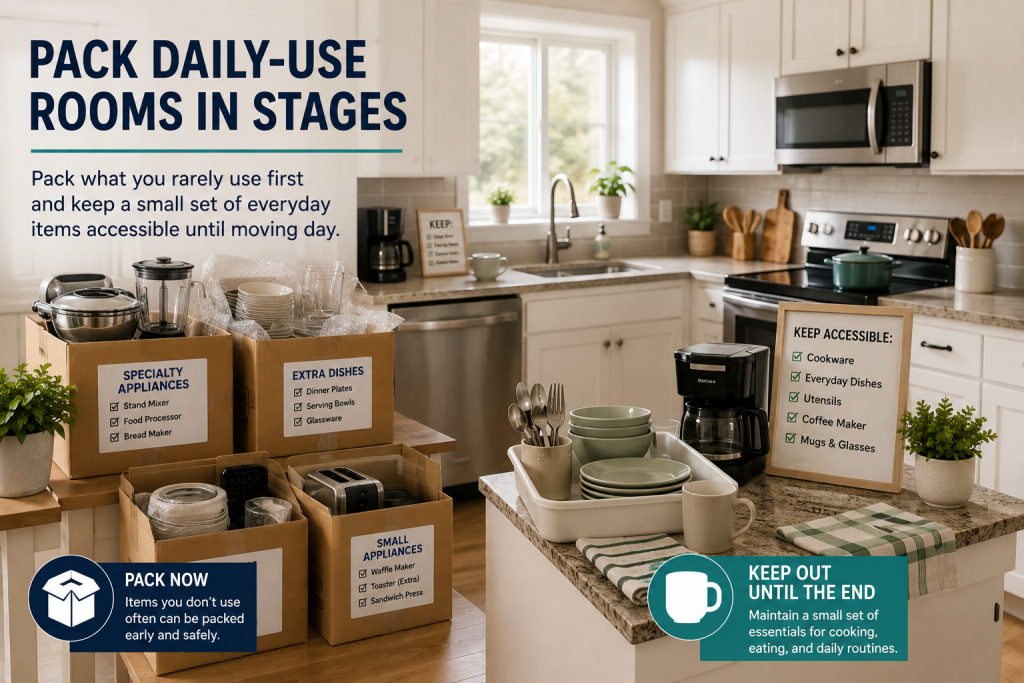
9. Pack the kitchen in stages
The kitchen is often one of the most time-consuming rooms, but packing it too early can make everyday life inconvenient.
Start with items you can stop using:
- Specialty appliances
- Serving pieces
- Holiday or formal tableware
- Duplicate utensils
- Extra cookware
- Pantry items you will not use before the move
- Decorative kitchen items
As moving day approaches, reduce the kitchen to a small working set of dishes, utensils, cookware, food-storage items, and basic appliances.
Use the final days to manage refrigerated and frozen food according to your travel time and moving plan. Some movers restrict perishable goods, and long-distance travel can make them impractical to transport.
Keep cleaning products and other chemicals separate until you confirm how to transport or dispose of them. EPA advises special care with household products that contain potentially hazardous ingredients instead of treating them like ordinary trash or moving-box contents.
10. Pack bathrooms near the end
Bathrooms support daily routines, so most households benefit from keeping them functional until the final stage.
Pack extra towels, backup toiletries, decorative items, duplicate grooming tools, surplus paper goods, and unopened supplies first.
Leave out the toiletries, medications, towels, and personal-care items you need through moving morning. Put them in a clearly marked essentials bag or container instead of burying them in a general bathroom box.
Review medicines, cleaners, aerosols, and other products individually. Keep some items with you, dispose of others properly, and follow mover or transportation requirements when they apply.
11. Finish with everyday essentials and open-first items
The final packing stage is not really a room. It covers the belongings that bridge the old home, the travel period, and the first hours in the new home.
Typical categories include:
- Identification and important documents
- Medications
- Phones, chargers, and essential electronics
- Keys
- Basic toiletries
- A change of clothes
- Bedding or sleep essentials
- Basic cleaning supplies that can be transported safely
- Simple food and drink items appropriate for the trip
- Pet or child essentials, when applicable
- A few basic tools or setup items
Keep these items separate from the general shipment when appropriate. This approach helps you avoid opening several boxes after arrival just to find something you need that evening.
How to adjust the order for your household
Base the best packing order on actual use rather than a rigid room list.
A home office may move to the end when you work remotely. A household that plans minimal cooking during the final week can pack much of the kitchen earlier. Children may need familiar toys or books available during the transition. Guests staying until shortly before moving day can turn a normally low-use guest room into a late-stage room.
For every space, ask one useful question: What can I pack now without interfering with life before moving day?
That question gives you a more reliable guide than trying to finish every room before you touch the next one.
Should you finish one room before starting another?
Usually, keeping boxes organized by destination room helps, but you do not need to finish every room in one session.
Pack mixed-use rooms in phases. The kitchen, bathrooms, bedrooms, office, and living room all contain belongings with different levels of urgency.
Finish the low-use portion of a room early, then leave a clearly defined working set for later. The main goal is to prevent the remaining items from turning into an unplanned last-minute pile.
Keep the order visible
A simple room list can keep the packing sequence organized as moving day gets closer.
For each room, track whether it is:
- Not started
- Sorted
- Partially packed
- Mostly packed
- Final-use items remaining
- Complete
This view makes it easier to spot when the household has disrupted too many daily-use rooms at once.
It also helps households divide the work. Different people can pack separate rooms while everyone follows the same labeling and inventory system.
The final rule: pack by frequency of use
No universal room sequence fits every household exactly. The most dependable rule is to move from low-use belongings toward high-use belongings.
Start with storage areas, seasonal items, guest spaces, decor, books, and hobby supplies. Move through bedrooms and living areas in stages. Keep the office, kitchen, and bathrooms functional according to household needs. Pack daily essentials last and keep them easy to reach.
That order keeps packing moving forward without forcing the household to live out of boxes earlier than necessary.
Frequently Asked Questions
What room should I pack first when moving?
For many households, storage areas, spare rooms, and other low-use spaces make good starting points. You are less likely to need their contents before moving day, so packing them first creates progress without disrupting everyday routines.
Should I pack the kitchen or bedrooms first?
Bedrooms often allow earlier progress than the kitchen because you can box clothing, decor, and spare linens gradually while keeping the room usable. Pack the kitchen in stages: start with specialty and low-use items, then leave a small everyday set for the final days.
When should I pack the bathroom?
Pack backup toiletries, extra towels, decor, and surplus supplies earlier, but keep daily toiletries, medications, and essential personal-care items available until the final days. Store those essentials in a small bathroom bag that stays separate from the general shipment.
Is it better to pack one room at a time?
Organizing boxes by destination room helps, but some rooms work better in phases. Bedrooms, kitchens, bathrooms, living areas, and home offices contain items you use at different frequencies. Pack the low-use portion first and keep a deliberate working set available.
What should be the last things packed before moving?
Daily routines, travel, and the first hours after arrival determine what you pack last. Keep identification, important documents, medications, chargers, basic toiletries, clothing, bedding, keys, and other essentials easy to identify and access.
Can I pack garage and household chemicals with my other belongings?
Do not assume household chemicals belong in ordinary moving boxes. EPA identifies categories of household hazardous waste that may require special handling, and FMCSA addresses hazardous materials in interstate household-goods shipments. Review the product, your transportation method, mover requirements, and local disposal options before packing it. Review local disposal options before packing it.
Continue With the Complete Packing Guide
Now that you know which rooms to pack first, continue with MuvvKit’s complete guide to packing for a move. Learn how to organize supplies, pack household belongings room by room, label boxes, handle everyday essentials, and prepare your packed home for moving day.
Read How to Pack for a MoveReferences & Sources
Editorial Note: MuvvKit uses authoritative sources to verify factual, safety, and regulatory information while developing its moving guides. The room-by-room sequence in this article is an editorial packing framework based on frequency of use rather than a government-prescribed order. Federal transportation requirements cited here primarily concern interstate household-goods moves in the United States. State, local, carrier, and product-specific requirements may differ.
- U.S. Environmental Protection Agency – Household Hazardous Waste. Explains why products such as certain paints, cleaners, oils, batteries, and pesticides can require special care in storage or disposal. https://www.epa.gov/hw/household-hazardous-waste-hhw
- Federal Motor Carrier Safety Administration – Before Requesting Services from Any Mover (Subpart B). Describes hazardous-material considerations and shipper responsibilities relevant to interstate household-goods transportation. https://www.fmcsa.dot.gov/protect-your-move/how-to/subpartB
- FMCSA – Liability & Protection. Notes that packing dangerous, hazardous, or perishable materials without the mover’s knowledge can affect a mover’s liability and explains additional interstate-move responsibilities. https://www.fmcsa.dot.gov/consumer-protection/protect-your-move/are-you-moving/liability-protection
- USDA Animal and Plant Health Inspection Service – Think Before You Move With Plants or Soil. Provides current guidance on reducing the risk of spreading plant pests and diseases when moving plants or soil. https://www.aphis.usda.gov/plant-pests-diseases/hungry-pests/how-stop-them/think-you-move-plants-or-soil