After the Move: How to Settle Into Your New Home Step by Step
Moving day may be finished, but settling in takes more than opening boxes. Follow this practical step-by-step guide to check your delivery, make the home safe, set up essential rooms, manage utilities and address changes, organize records, and gradually turn your new place into a functioning home.

Moving Day Is Over. Now Make the Home Work for You
Once the truck is unloaded and the last box is inside, it is tempting to think the move is finished. In practice, there is one more stage: turning the new address into a safe, functional, organized home. That does not require unpacking everything immediately. It requires doing the right things in the right order.
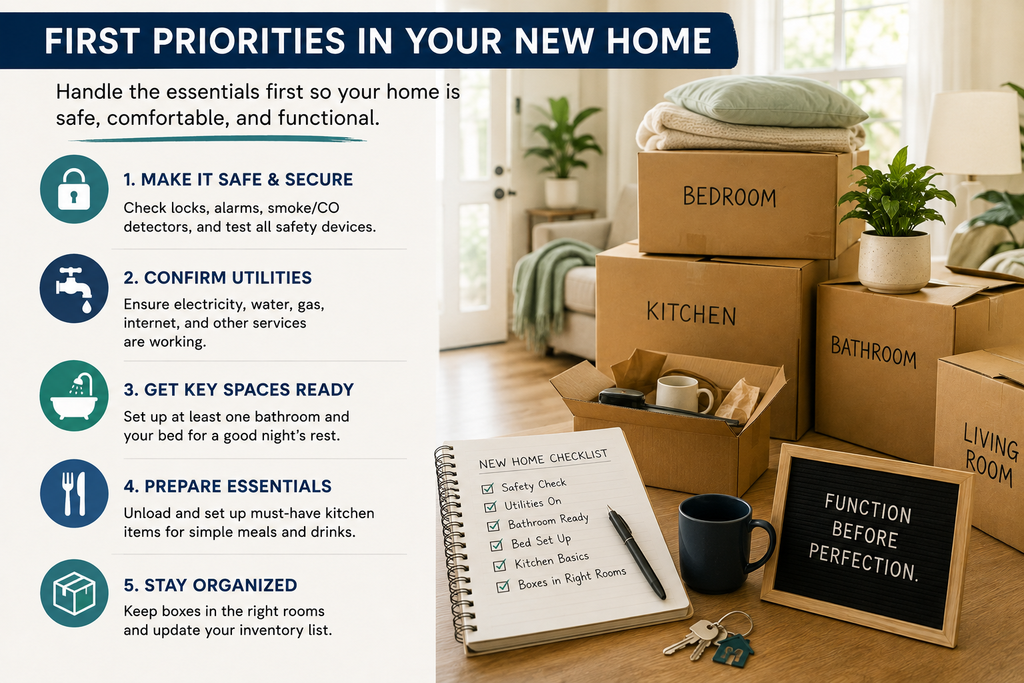
A useful post-move rule is function before perfection. Start with safety, sleep, hygiene, food, medications, children or pet needs, work and school necessities, and essential household systems. Decorative decisions and low-priority boxes can wait until the home is working reliably.
Begin by restoring the household functions needed for the first evening and following morning. This guide to what to unpack first after moving prioritizes medication, sleep, hygiene, food, communication, and daily routines before lower-priority rooms.
The steps below move from the first hours after delivery through the first month. Use them as a sequence, but adjust the pace to your household, lease or closing requirements, local rules, service-provider deadlines, and the condition of your belongings.
Step 1: Confirm the Delivery Before You Fully Unpack
Before boxes disappear into closets and rooms, make a quick delivery review. Confirm that major furniture, numbered boxes, containers, and other expected items arrived. If you used an inventory or box-labeling system, compare what is present with your records while the move is still fresh.
Look for obvious loss or damage and photograph anything that may require documentation. Keep delivery paperwork, estimates, contracts, receipts, inventories, and photographs together. If an interstate mover handled the shipment and you discover missing or damaged goods, the Federal Motor Carrier Safety Administration advises contacting the mover, documenting the problem, and filing a written claim within the applicable deadline. Do not postpone documentation simply because you want to start unpacking.
If everything appears in order, create one place for move-related records so papers do not become mixed into unpacking piles.
Once the delivery is complete, use this guide to the first 24 hours in a new home to verify access, essential services, safety equipment, sleep arrangements, food, and next-morning needs.
Step 2: Make the New Home Safe and Secure
Do a practical safety check before concentrating on décor or organization. Confirm that exterior doors and accessible windows close and lock properly. Keep hallways, stairs, and exits clear of boxes. Locate the electrical panel, main water shutoff, and other controls you may need in an emergency.
Include the home’s fire and carbon-monoxide warning devices in your initial safety review. Make sure appropriate alarms are present throughout the home and near sleeping spaces, then test each unit according to its manufacturer’s instructions. If an alarm is missing, damaged, past its recommended service life, or not working correctly, address it promptly. For current placement and safety recommendations, consult CPSC guidance and any applicable local requirements.
Check for obvious leaks, unusual odors, damaged outlets, tripping hazards, or other conditions that need attention. Renters should document relevant pre-existing conditions and follow the landlord or property manager’s reporting process. Homeowners should arrange qualified service when a repair is beyond a simple household check.
Step 3: Set Up the First-Night Essentials
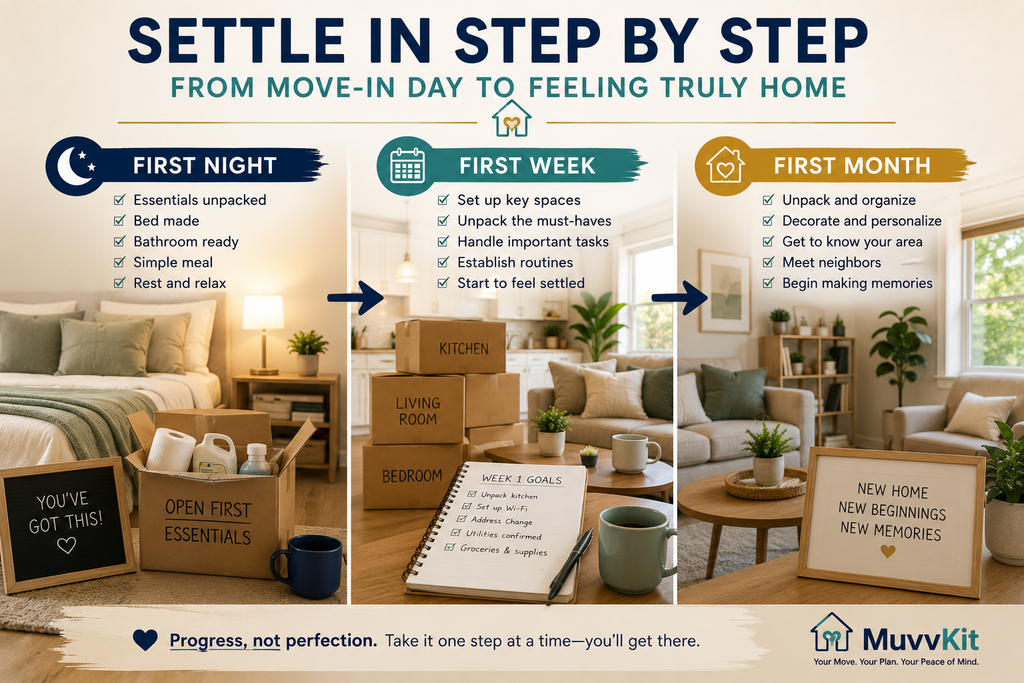
Your first goal is not a finished house. It is a household that can comfortably get through the night and the next morning.
Set up beds or safe sleeping arrangements first. Make at least one bathroom fully usable with toilet paper, soap, towels, toiletries, and medications. Create a simple food and water station, locate chargers, and set out clothes for the next day. If children or pets are part of the move, establish their familiar sleeping, feeding, comfort, and safety items early.
Keep important documents, keys, wallets, medications, and valuable items in a known location rather than placing them into general unpacking piles. A small charging station and a designated spot for keys and incoming mail can prevent unnecessary searching during the first few days.
After the household’s immediate needs are stable, use the first week after moving checklist to organize essential rooms, utilities, address updates, records, household routines, and unresolved move-related issues.
Step 4: Verify Utilities and Core Home Services
Confirm that electricity, water, hot water, heating or cooling, and any other essential services are operating as expected. Test the appliances you expect to use immediately rather than discovering a problem when you need them.
If internet service is important for work, school, security equipment, or household communication, confirm the connection and equipment setup early. Keep account numbers, installation notes, and service contacts together until every transfer or new-service order is complete.
Do not assume that a utility transfer is finished simply because service is on. Review final bills from the old address and first bills at the new address for the correct service dates and account information.
Step 5: Unpack Rooms in Order of Daily Need
A room-by-room approach is usually easier than opening boxes throughout the house at once. Prioritize the rooms that support daily life.
Start with bedrooms and one bathroom so everyone can sleep and get ready normally. Next, establish a working kitchen with basic cookware, dishes, food storage, cleaning supplies, and the appliances you use most. Then set up clothing, work or school materials, and one comfortable living area.
Leave décor, memorabilia, seasonal items, duplicate household goods, and other low-use boxes until the essential rooms function. This keeps your attention on the parts of the home that reduce day-to-day friction.
As you finish a box, remove packing paper and flatten or consolidate empty cartons. Keeping packing waste under control makes progress visible and reduces clutter.
Before broad unpacking begins, complete the closeout steps in the moving day checklist, including document review, damage notes, security checks, and locating first-night supplies.
Step 6: Organize the Unpacking Process Instead of Creating New Piles
Unpacking can become disorganized when every undecided item is moved from a box to a countertop, floor, or spare room. Give uncertain items a defined temporary location instead.
Create a single ‘decide later’ zone for belongings that do not yet have a home. Keep it contained and revisit it after you have lived in the space long enough to understand how the rooms actually function. This is often more effective than forcing permanent storage decisions during the first exhausted days after a move.
If boxes are labeled by room or number, keep a short list of anything still unopened. That prevents forgotten boxes from becoming permanent storage and helps you distinguish genuinely low-priority items from things you simply have not reached yet.
Keep Your Move on Track
Still working through the last details of your move? Use the free MuvvKit Moving Checklist to keep important moving and settle-in tasks organized in one convenient place.
Get the Free Moving ChecklistStep 7: Complete Your Address Changes and Mail Follow-Up
Mail forwarding is a useful transition tool, but it should not replace updating important organizations directly. If you have not already submitted a U.S. Postal Service Change of Address request, review the current USPS process and identity-verification requirements. Then update the people and organizations that regularly send you important mail.
Work through address changes by priority: financial institutions, insurance providers, employers, government agencies, health and professional providers as appropriate, subscriptions, memberships, schools, and other accounts connected to your household. Requirements vary, so verify deadlines and procedures directly with the relevant organization.
For federal tax records, the IRS provides several ways to report an address change, including Form 8822 for an individual’s home mailing address. A USPS change of address does not necessarily update every government or private record automatically.
Step 8: Update Household Accounts, Records, and Local Requirements
A move can affect more than mailing addresses. Review accounts and records that depend on where you live. That may include driver’s license or vehicle records, voter registration, insurance, banking, payroll, schools, medical records, pet records, permits, parking arrangements, building access, or local services.
There is no single universal deadline for these tasks. State and local requirements differ, and private organizations set their own procedures. Use official state, local, employer, insurer, bank, and service-provider sources rather than assuming that a rule from your old location still applies.
Keep a simple checklist showing what has been updated, what is pending, and whether confirmation was received. This turns a scattered administrative task into a finite project.
Mail forwarding is only one part of updating your information after a move. Use this address change checklist to identify the government agencies, financial institutions, insurers, healthcare providers, utilities, subscriptions, and other organizations that may need your new address.
Step 9: Review Moving Costs and Keep Important Records
Once immediate unpacking is under control, reconcile the move financially. Compare final charges with your estimates, note deposits or refunds that are still outstanding, and identify expenses that have not yet posted.
Keep mover contracts, bills of lading or delivery documents, receipts, inventories, damage photographs, claim correspondence, rental-truck records, storage documents, and other significant paperwork together. Some records may be needed for a claim, reimbursement, employer relocation program, insurance question, or tax discussion.
Do not assume a moving expense is deductible or reimbursable. Tax rules and employer policies can change and depend on individual circumstances. Use current official guidance or a qualified professional when a financial or tax decision matters.
Step 10: Build Simple Systems for the New Home
After the essentials are functioning, start creating the small systems that make the home easier to live in. Choose consistent places for keys, mail, shoes, bags, charging devices, cleaning supplies, frequently used tools, and household paperwork.
Avoid trying to reproduce the exact organization of your previous home. The new layout may work better with different storage locations and routines. Live in the space, notice where clutter naturally collects, and adjust the system to the way the household actually moves through the rooms.
This is also a good time to make a short list of items you genuinely need. Waiting a few days before buying organizers, furniture, or storage products can prevent purchases based on assumptions rather than the realities of the new space.
Step 11: Tackle the First Week in Manageable Priorities
During the first week, aim to make the household predictable. Finish the most-used rooms, resolve urgent service problems, continue high-priority address updates, and remove empty moving materials. Confirm that work, school, transportation, medication, food, laundry, and household routines can operate normally.
Choose a realistic daily target rather than treating every unopened box as an emergency. For example, finish one room, one category of administrative updates, or a defined group of boxes. Consistent progress is easier to sustain than an exhausting all-at-once unpack.
At the end of the week, walk through the home and identify what is still preventing normal daily use. Those items become the next priorities.
Step 12: Use the First Month to Finish, Adjust, and Settle In
The first month is a better time for lower-priority organization and refinement. Finish remaining boxes, decide what should be donated or discarded, improve storage, hang décor, and make furniture adjustments after you understand the space.
Review unresolved address changes, deposits, claims, service issues, and moving records. Check that important mail is reaching you and that old accounts or utilities have been closed correctly. If you created a temporary ‘decide later’ area, schedule a final pass through it.
Settling in also means learning the practical details around the home: trash and recycling routines, building or neighborhood procedures, nearby essentials, transportation patterns, and the service contacts you may need later. These small pieces of familiarity are what gradually turn a new address into a normal home.
A Simple Settle-In Order to Remember
When the post-move workload feels scattered, use this sequence: confirm the delivery, secure the home, set up first-night essentials, verify utilities, unpack high-use rooms, complete address and account updates, organize records, and then refine the home over the following weeks.
You do not need to finish everything at once. A successful settle-in is not measured by how quickly every box disappears. It is measured by whether the home becomes safe, functional, organized, and increasingly easier to live in.
For more help organizing the first hours, first week, unpacking priorities, and address updates, visit the complete Settle Into Your New Home resource hub
Frequently Asked Questions
How soon should I unpack after moving?
Start essential items immediately, but there is no need to unpack the entire home in a day or weekend. Prioritize sleep, bathrooms, food, medications, work or school needs, and other daily necessities before lower-use belongings.
What room should I unpack first?
Bedrooms and at least one bathroom are strong priorities because they support sleep and basic routines. A functional kitchen usually follows closely. The best order can change based on children, pets, medical needs, remote work, or other household priorities.
What should I do if something is damaged after an interstate move?
Document the damage, keep relevant records, and contact the mover promptly. FMCSA states that written loss or damage claims for interstate household-goods shipments must generally be filed with the mover within nine months of delivery. Review your mover’s claim instructions and applicable valuation coverage.
Does changing my address with USPS update everyone automatically?
No. USPS mail forwarding helps redirect eligible mail, but important organizations should be updated directly. Government agencies, financial institutions, insurers, employers, and other account providers may have their own address-change procedures.
What safety checks should I do in a new home?
At minimum, confirm doors and accessible windows secure properly, keep exits clear, locate important shutoffs, look for obvious hazards, and test smoke and carbon monoxide alarms according to manufacturer instructions. Repair or professional-service needs should be handled appropriately.
How long does it take to feel settled after a move?
There is no universal timeline. Household size, work schedules, the number of belongings, repairs, children, pets, and administrative requirements all affect the process. Focus on a functional home first and improve organization over time.
Turn Your New House Into an Organized Home
The MuvvKit Unpacking & Settle-In Planner helps you organize your first night, prioritize rooms and boxes, track important setup tasks, and work through your first 30 days without trying to do everything at once.
Explore the Unpacking & Settle-In PlannerReferences & Sources
U.S. Postal Service. “Change of Address – The Basics.” USPS FAQ. https://faq.usps.com/articles/Knowledge/Change-of-Address-The-Basics
U.S. Consumer Product Safety Commission. “CO Alarms” and carbon monoxide safety guidance. https://www.cpsc.gov/Safety-Education/Safety-Education-Centers/Carbon-Monoxide-Information-Center/CO-Alarms
Internal Revenue Service. “About Form 8822, Change of Address” and “Address changes.” https://www.irs.gov/forms-pubs/about-form-8822
Federal Motor Carrier Safety Administration. “Have you discovered Loss and/or Damage to your Household Goods Shipment?” and “What if there are problems?” https://www.fmcsa.dot.gov/protect-your-move/resources/discovered-loss-damage
MuvvKit. “Free Moving Checklist” and “Unpacking & Settle-In Planner.” Internal MuvvKit planning resources.
Important Note
This article is for general organizational and informational purposes. It is not legal, tax, insurance, safety, or professional moving advice. Requirements and deadlines can vary by location, provider, type of move, and individual circumstances. Verify important requirements directly with the relevant government agency, service provider, mover, insurer, landlord, property manager, or qualified professional.