First 24 Hours in a New Home: What to Set Up First
Make the new home safe and usable during the first 24 hours by checking access, utilities, alarms, essential rooms, food, medication, security, and next-day needs.
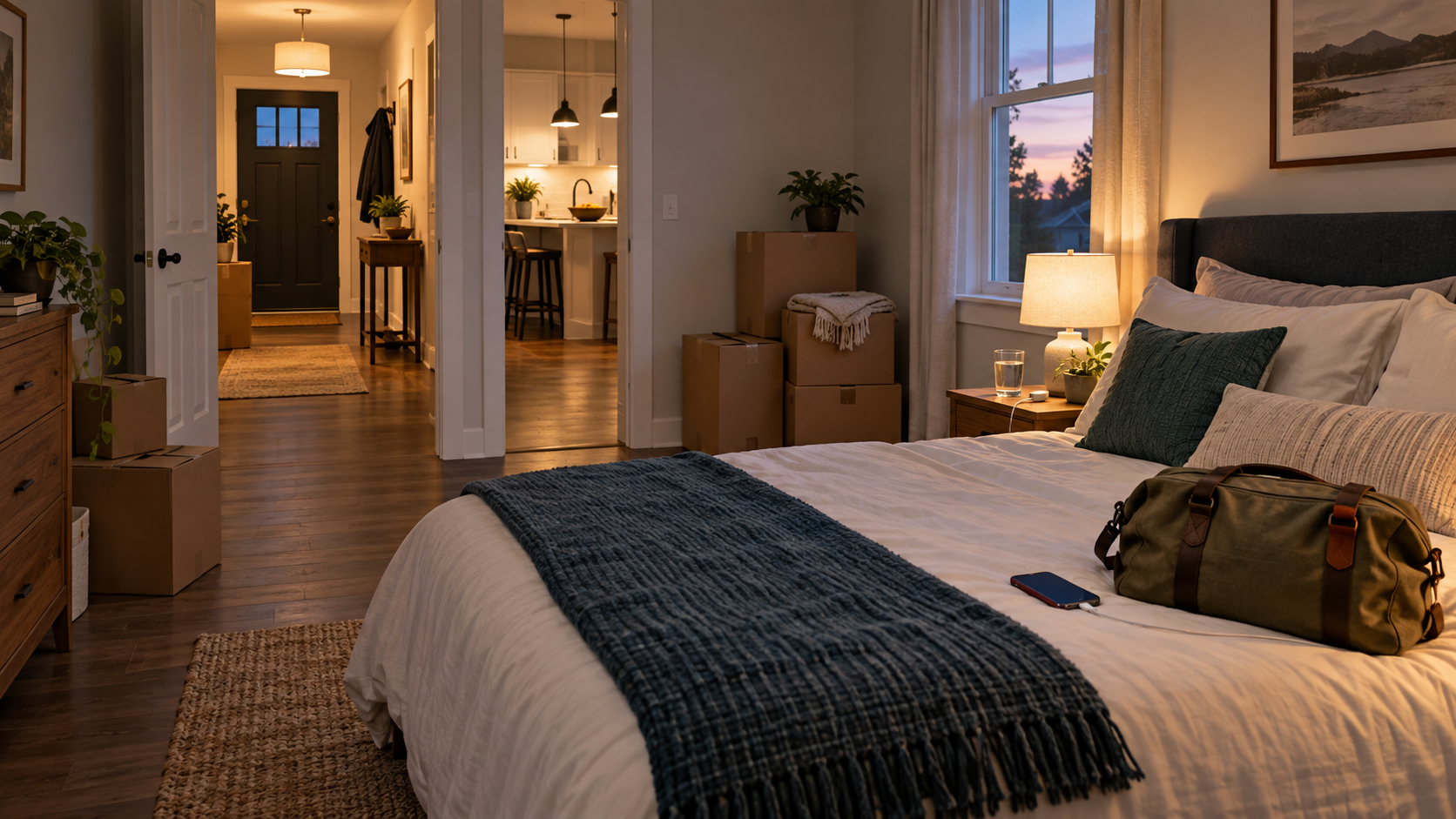
The first 24 hours in a new home are less about finishing the move and more about restoring the household functions you need right away. Start by confirming access, utilities, safety equipment, medication, sleep arrangements, food, hygiene, and communication. Once those basics work, you can make a short plan for the next day without opening boxes throughout the entire home.
This guide uses a flexible MuvvKit sequence rather than a rule that every household must follow. Change the order for health needs, accessibility, children, pets, work schedules, property conditions, weather, or instructions from a landlord, utility, manufacturer, or local authority.
For the broader post-move sequence, use settling into your new home step by step.
First 24 Hours in a New Home at a Glance
| Stage | Main priority | Useful result |
| On arrival | Confirm entry, utilities, property condition, and safe walking paths | The home can be entered and used without avoidable obstacles |
| First few hours | Locate essentials, test alarms, check water and major appliances, and secure doors and windows | Immediate safety and basic services are understood |
| First evening | Prepare sleep, bathroom, simple food, medication, child, and pet routines | The household can rest and manage essential needs |
| Before bed | Lock up, charge phones, set lighting, and identify exits | The first night is more predictable |
| Next morning | Review urgent issues, delivery discrepancies, services, and the day’s priorities | Problems are documented, and the next steps are limited to a manageable list |
Organize the First Day Without Opening Every Box
The MuvvKit Unpacking & Settle-In Planner brings first-day and first-week tasks, open-first essentials, box tracking, and room setup into one practical post-move system.
View the Unpacking & Settle-In PlannerBefore Unpacking, Confirm That You Can Use the Home Safely
Do a short walk-through before moving cartons into every room. You are not trying to complete a formal inspection. You are looking for conditions that could affect the first day: water where it should not be, unusual odors, damaged steps or railings, exposed wiring, broken glass, blocked exits, unstable fixtures, or signs that a room should remain unused.
Verify access and keep critical items with you
Confirm that the keys, entry codes, garage controls, elevator arrangements, parking instructions, and building access work as expected. Keep identification, contracts or closing records, medication, valuables, chargers, basic tools, and contact information in a controlled location rather than placing them among ordinary boxes.
If an entry device or lock does not work, contact the responsible property representative or a qualified locksmith. Tenants should follow their lease and obtain required permission before changing locks or hardware.
Document the condition before boxes cover it
Take clear, date-stamped photos or video of empty rooms and any visible damage, especially floors, walls, doors, windows, appliances, meters, and areas noted in a lease, inspection, delivery agreement, or closing record. Send time-sensitive concerns through the channel required by the landlord, property manager, seller, mover, insurer, or service provider.
Do not delay an urgent response merely to create perfect records. If you smell gas, see sparking, find active flooding, or encounter another immediate hazard, leave or avoid the area and contact the appropriate emergency service, utility, property representative, or qualified professional.
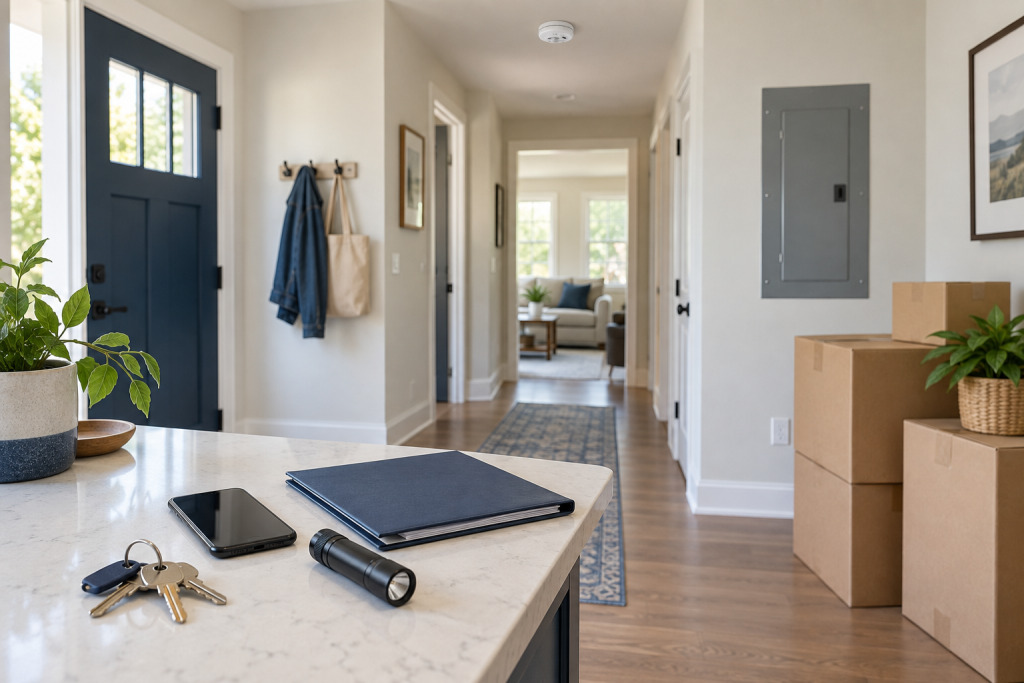
Create clear routes through the home
Place boxes against stable walls or in assigned rooms without blocking exits, stairs, electrical panels, shutoff access, heating equipment, or walkways. Remove loose packing material from traffic areas. Add temporary lighting where halls, stairs, or entrances are dim.
If unloading is still underway, return to the moving day checklist from morning through the final walkthrough so the handoff, box count, damage notes, and priority-item placement are completed before the crew leaves.
Check Utilities and Essential Home Systems
Confirm which services are active instead of assuming that every fixture and appliance is ready. Test only what you can assess safely and without dismantling equipment. Record problems, the time discovered, and the person or provider contacted.
Electricity, lighting and charging
Check that essential rooms have power and that switches and outlets needed for lamps, refrigeration, medical equipment, internet equipment, and phone charging operate normally. Do not use a damaged outlet, exposed conductor, hot switch plate, sparking fixture, or repeatedly tripping circuit. Keep extension cords temporary, visible, and away from wet areas and walkways, and follow the product’s rating and manufacturer instructions.
Water plumbing and hot water
Run water briefly at the fixtures you expect to use. Look below sinks and around toilets, tubs, water heaters, and appliance connections for active leaks. Confirm that toilets flush and drains clear. Learn where the main water shutoff is if it is accessible and safe to identify. Ask the utility or property manager about any current water advisory rather than relying on appearance or taste alone.
Heating, cooling, refrigeration and internet
Confirm that the home can maintain a reasonable temperature for the people, animals, medication, and equipment present. Follow the thermostat, appliance, lease, and utility instructions. Check that the refrigerator is cooling before transferring perishable food. If food may have been held without safe refrigeration during travel or a service interruption, use current government food-safety guidance rather than tasting it to decide whether it is safe.
Internet setup can wait unless it supports work, school, communication, security, accessibility, or medical needs. Keep account numbers and provider contacts together so troubleshooting does not become another search through boxes.
Test Safety Equipment and Learn the Exits
Locate smoke alarms and any carbon monoxide alarms, then test them according to the manufacturer’s instructions. The U.S. Fire Administration advises placing smoke alarms inside and outside sleeping areas and on every level of a home, while also noting that local requirements may specify alarm types or installation details. Do not disable an alarm because it is inconvenient.
Identify at least two ways out when the home’s layout allows, and keep those paths free of cartons. Make sure everyone knows the outside meeting location and how to unlock the doors or windows they may need. Households with children, older adults, disabilities, hearing loss, pets, or mobility equipment may need a more specific plan or specialized alarms.
Locate emergency controls without experimenting
Identify the electrical panel, water shutoff, fire extinguisher, and any property-provided emergency information. Do not operate unfamiliar gas valves, electrical equipment, fire-suppression systems, or building controls merely to test them. Ask the utility, property manager, building staff, or a qualified professional for instructions.
Open the Supplies Needed for the First Evening
Use the open-first boxes and personal bags before opening room cartons at random. A practical group usually includes medication and health supplies, documents, phones and chargers, water, basic food, toiletries, towels, toilet paper, soap, a change of clothes, bedding, child supplies, pet supplies, and a small tool and cleaning kit.
If those items are scattered, use the guide to what to pack in a first-night moving essentials kit to rebuild one accessible group before broad unpacking begins. For the room-by-room order, follow what to unpack first after moving.
Set Up One Usable Bathroom and One Place to Sleep
A complete bathroom and a safe sleeping area provide more value on the first night than several half-opened rooms. Choose the bathroom and bedroom that best fit accessibility, temperature, noise, child supervision, pet separation, and morning schedules.

Make one bathroom functional
- Confirm that the toilet, sink, drain, lighting, and door work.
- Place soap, toilet paper, towels, toothbrushes, routine medication, and basic hygiene supplies.
- Add a nonslip bath mat if needed and remove boxes from the route.
- Keep cleaning products, tools, medication, and sharp items secured from children and pets.
- Note leaks, loose fixtures, damaged outlets, or ventilation problems for follow-up.
Prepare beds before fatigue takes over
Assemble beds only according to the manufacturer’s instructions, or use a safe temporary sleep arrangement that suits the household. Add clean bedding, pillows, night lighting, water, chargers, and any nighttime medication or mobility aids. Keep the route to the bathroom and exits clear.
Do not place children or pets in rooms with unstable furniture, loose cords, unsecured windows, open boxes of small items, tools, or accessible chemicals. Full childproofing and furniture anchoring may continue later, but the first occupied areas need immediate controls.
Once the home is safe and usable for the first night, continue with the first week after moving to stabilize services, finish high-use rooms, begin address updates, organize records, and rebuild household routines.
Handle Food With a Simple First-Day Plan
Keep the first meals simple so kitchen setup does not become the entire evening. Use shelf-stable food, verified cold items, takeout, or a small group of clean dishes and utensils. Confirm that cooking equipment and ventilation work before use, and keep packing paper, cartons, and cleaners away from heat and food-preparation surfaces.
FoodSafety.gov states that a closed refrigerator generally keeps food safe for up to four hours during a power outage and advises discarding refrigerated perishables after four hours without power. Conditions during a move vary, so check current official guidance when food temperature or travel time is uncertain; never taste food to determine its safety.
Restore Child Pet Work and Medication Routines
Household routines may determine the unpacking order more than room names. Set up the supplies required for the people and animals who depend on consistent timing.
Children
Create one supervised, low-clutter area with familiar sleep items, clothing, snacks, school or childcare information, and comfort objects. Explain which rooms or stacks are off-limits. Check gates, balcony access, pools, cords, medications, cleaning products, tools, and exterior doors before allowing normal movement through the home.
Pets
Choose a quiet, secure room or contained area with water, food, bedding, litter or waste supplies, medication, and identification. Confirm that doors, screens, fences, balconies, and gates are secure before expanding access. Keep pets separated from open exterior doors and active unloading.
Medication accessibility and morning obligations
Keep medication in its labeled container and store it according to the instructions provided by the pharmacy or manufacturer. Set alarms for time-sensitive doses and place mobility, respiratory, monitoring, or accessibility equipment where it can be used safely. Prepare clothing, keys, work or school devices, lunch supplies, and transportation information for the next morning.
Secure the Home Before Bed
Walk through the occupied areas once more. Lock accessible doors and windows, close the garage, retrieve exterior keys, and remove spare keys left by prior arrangements when authorized. Confirm that phones are charging and that a flashlight, shoes, keys, medication, and emergency contacts are easy to reach.
Security changes depend on ownership, lease terms, building systems, warranties, and local requirements. Owners may consider rekeying or replacing authorized locks; tenants should coordinate changes with the landlord or property manager. Update alarm, garage, smart-lock, or access codes only through the manufacturer’s or authorized provider’s process.
Use the Next Morning for Verification and a Short Priority List
The first morning is a good time to separate urgent problems from ordinary settling-in work. Review the photos and notes, confirm that essential services remained stable overnight, and check that the refrigerator, plumbing, temperature, alarms, locks, and occupied rooms function as expected.
- Report urgent property, delivery, damage, or service issues through the required channel.
- Check the box count and locate any missing priority carton.
- Confirm appointments, internet or utility follow-up, and access arrangements.
- Choose one or two rooms or systems to complete next.
- Collect flattened boxes and packing material without blocking exits or required disposal areas.
- Schedule tasks that require permission, special tools, or a qualified professional.
Continue with the first week after moving guide for service follow-up, room setup, household records, local routines, and lower-priority organization. If mail and account updates are still incomplete, use the address change checklist to organize the next round of notifications.
What Can Wait Until After the First 24 Hours
Most decorative decisions, detailed storage systems, artwork, guest-room setup, seasonal boxes, and perfect furniture placement can wait. Unless a task affects safety, health, access, essential services, contractual reporting, or the next day’s obligations, it does not need to compete with sleep and basic household function.
Avoid making tired decisions that create rework. Live with traffic patterns before mounting heavy items, buying organizers, or opening every decor box. Keep a short parking list for ideas that matter but are not urgent.
Common First-Day Mistakes to Avoid
- Opening boxes in every room without completing one functional area.
- Blocking exits, stairs, panels, shutoffs, vents, or walking paths with cartons.
- Assuming utilities, alarms, locks, appliances, and plumbing work without a basic check.
- Moving perishable food into a refrigerator before confirming that it is cooling.
- Failing to photograph damage or report a time-sensitive concern.
- Leaving tools, medication, cords, chemicals, small objects, or exterior doors accessible to children or pets.
- Trying unfamiliar repairs or controls without the required knowledge, authorization, or professional help.
- Using the entire night for unpacking and starting the next day without sleep, clothing, keys, chargers, or needed records.
Once the immediate first-day tasks are complete, continue with the practical checklists and unpacking guidance in the Settle Into Your New Home hub
Frequently Asked Questions
What should I do first when I arrive at a new home?
Confirm that you can enter safely, keep documents and essentials controlled, walk through the property, document visible conditions, clear the main routes, and verify essential utilities. Address an immediate hazard before routine unloading or unpacking.
Do I need to unpack everything in the first 24 hours?
No. Focus on safety, sleep, hygiene, medication, food, communication, child and pet needs, and the next morning’s obligations. Most decor, storage, guest-room, and low-use boxes can wait.
Which room should I set up first?
For many households, one bathroom and one sleeping area come first. The best order may change for medical equipment, accessibility, infant care, pets, remote work, climate control, or another immediate need.
Should I change the locks immediately?
Owners may decide to rekey or replace authorized locks, but the correct process depends on the hardware, warranty, closing arrangements, and local requirements. Tenants should follow the lease and coordinate with the landlord or property manager before changing locks.
What should I check before putting food in the refrigerator?
Confirm that the refrigerator has power and is cooling. If perishable food may have been held too warm during travel, unloading, or a power interruption, follow current government food-safety guidance rather than judging it by taste or smell alone.
What should I photograph on the first day?
Photograph empty rooms, floors, walls, doors, windows, appliances, meters, and any existing damage or delivery issue relevant to a lease, inspection, closing record, mover claim, or service request. Follow the applicable reporting method and deadline.
What if I find a serious problem after moving in?
Keep people away from the affected area and respond according to the hazard. For gas odors, fire, sparking, flooding, structural instability, loss of essential service, or other immediate danger, contact the appropriate emergency service, utility, property representative, or qualified professional. Document the condition only when it is safe to do so.
Keep the Move and the New-Home Setup Connected
The Complete Moving Planner Bundle connects timelines, packing plans, moving-day information, and post-move organization in one coordinated planning system.
View the Complete Moving Planner BundleEditorial Note
The 24-hour order in this article is an original MuvvKit editorial framework for prioritizing household function after a move; it is not an official timetable or universal requirement. Official sources are used for specific fire-alarm and food-safety guidance. Property procedures, lease duties, utility instructions, alarm requirements, appliance directions, reporting deadlines, and local rules can change. Verify current requirements with the relevant agency, provider, contract, lease, manufacturer, property representative, insurer, or local authority.