What Should You Pack First When Moving?
Pack low-use belongings first and preserve a small operating set for daily life. This guide explains which categories to box early, what to keep accessible, and how to complete the first packing session.

What should you pack first when moving? Begin with the belongings your household can live without for the longest time. Seasonal clothing, decorations, collections, books, guest-room contents, archived records, and duplicate household items are usually sound first choices. Daily medicine, identification, keys, valuables, chargers, work materials, basic cookware, current clothing, and overnight supplies should remain accessible.
That principle matters more than any fixed room order. A spare bedroom may be easy to close, while a home office may need to operate until the final day. Use the broader sequence in How to Pack for a Move: A Room-by-Room Household Packing Guide together with the availability test below.
The Short Answer
Start with items that have no planned use before the move and can stay unavailable until you unpack. Complete one defined category or low-use area at a time. Seal, label, and record each box before opening another packing zone.
At the same time, establish two exceptions. Keep an operating set for ordinary life before departure, and create a personally controlled travel group for documents, medicine, valuables, keys, essential devices, and immediate arrival needs. Those exceptions prevent early packing from disrupting the household.
Use the Availability-First Test
The availability-first test is an original MuvvKit planning method, not an official moving rule. Ask four questions about a category before placing it in the first boxes:
- Will anyone need it before loading day?
- Will it be needed during travel or immediately after arrival?
- Does it require a transport decision, special preparation, or confirmation from the mover?
- Can the household locate it quickly if plans change?
A category is ready for early packing when the first two answers are no, any handling question has been resolved, and the contents can be identified without reopening the carton. This method works across homes of different sizes because it measures access rather than assuming that every household uses rooms in the same way.
What to Pack First
Packing is easier when you have already decided what will actually move with you. If you are still sorting your belongings, work through what to declutter before moving—and what to decide first before sealing the first group of boxes.
1. Off-season clothing and footwear
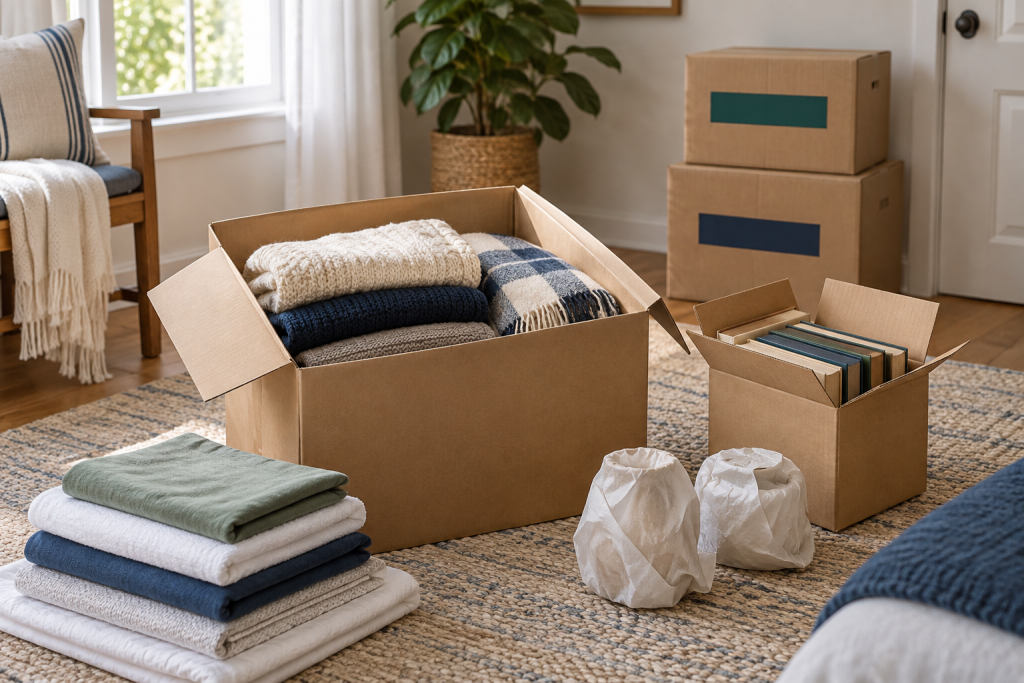
Begin with clothing that does not match the weather or any scheduled event before the move. Keep a limited working wardrobe for the remaining weeks, travel, moving day, and the first days after arrival. Avoid sealing every coat, uniform, or weather layer if conditions may change.
2. Holiday decorations and occasional decor
Holiday items, table decorations, wreaths, display pieces, and decor tied to an event outside the moving period can usually become closed inventory early. Remove batteries where the manufacturer directs, protect fragile pieces individually, and avoid making one carton too heavy by combining dense objects with large decorative items.
3. Books, collections, and display objects
Books and display collections can reduce visual clutter once packed, but small dense cartons are easier to handle than oversized book boxes. Photograph or list a collection before separating it across cartons when the grouping matters. Property with unusual value, fragility, or insurance considerations needs a transport decision before it is packed.
4. Guest-room and spare-space contents
An unused guest room, formal room, or hobby corner can often be closed without affecting daily routines. Pack extra bedding, spare lamps, display items, and inactive supplies. Do not treat the entire room as disposable access if it will house guests, pets, work, or staged moving supplies before departure.
5. Archived papers and inactive files
Box records that will not be needed during the move, but separate identification, contracts, current financial or medical information, vehicle records, housing documents, and mover paperwork. Sensitive records should remain protected and traceable. Important originals may belong in the personally controlled travel group rather than the shipment.
6. Duplicate and occasional household items
Extra linens, duplicate utensils, serving pieces, specialty cookware, backup small appliances, and surplus bathroom supplies are useful early categories. Keep one functional set for each person and active room. Packing duplicates first gradually reduces the home without forcing anyone to reopen boxes.
7. Inactive hobby and storage items
Pack craft materials, sports equipment, tools, and garage items only when no use is scheduled, and their transport is allowed. Mixed storage deserves an early review because it often combines belongings to pack, donate, recycle, discard, or handle separately.
A Practical First-Day Packing Order
Before starting the first category, review the packing supplies needed to contain, cushion, seal, and identify the finished boxes.
The first packing session should produce a small group of fully completed boxes, not a house full of open containers. One practical order is:
- Choose one low-use category, such as off-season clothing or extra linens.
- Set aside anything that belongs elsewhere, needs a decision, or must remain available.
- Prepare the correct box and protective material for the selected contents.
- Pack only that category or clearly defined area.
- Close the box, add its destination and identifying code, and record a short contents description.
- Place the finished box in a safe completed-box zone before beginning the next one.
If the move date is still being organized, pair this sequence with When Should You Start Packing for a Move? to decide how many early categories should be completed each week.
Organize the Packing Process by Room
The MuvvKit Room-by-Room Packing System provides worksheets for planning, labeling, and tracking each area of the home.
View the Room-by-Room Packing SystemAs the earliest cartons are completed, assign each one a destination and unique number using this moving-box labeling system.
What Not to Pack First
The household operating set
Keep enough clothing, bedding, towels, toiletries, dishes, cookware, food-preparation tools, cleaning supplies, work equipment, school materials, and pet supplies for the time remaining. The set should be small, but it must reflect actual routines rather than an idealized minimum.
Carry-with-you essentials
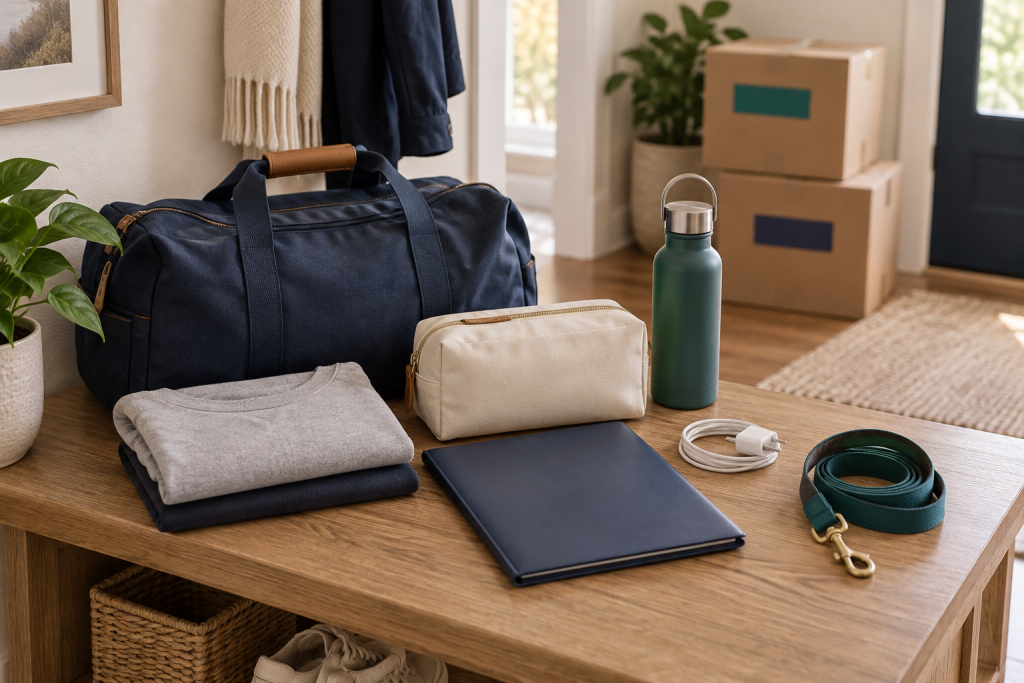
Separate identification, keys, payment methods, current move documents, medicine, necessary medical equipment, valuable property, phones, chargers, and immediate supplies for children or animals. Keep these items under household control. Do not let a convenient open box turn into the accidental destination for essential property.
Items needing special handling decisions
Set aside chemicals, fuels, loose batteries, pest-control supplies, and other questionable products before closing the first cartons. Read each package’s handling directions and compare the item with the mover’s current prohibited-items list. If it cannot travel, use the disposal or collection options provided by the appropriate local authority. Resolve that decision while the container and its identifying information are still available.
Also pause before packing plants, perishable food, liquids, fuel-powered equipment, firearms, ammunition, high-value property, or unusually fragile objects. The correct choice depends on the route, carrier policy, applicable law, manufacturer instructions, and the conditions of the move.
How to Choose the First Room
A low-use room is often a useful starting point, but household function should control the choice. The sequence in The Best Room-by-Room Order for Packing a Home begins with spaces that can be closed while keeping daily-use areas active.
- Choose a room with few items needed before departure.
- Prefer a space where decisions are straightforward and packing supplies can be contained.
- Avoid blocking exits, walkways, utility access, or furniture that still needs to be used.
- Do not begin in several rooms at once unless different people have clearly assigned zones.
A guest room may work well in one home. In another, the first completed zone may be a hall closet, part of a basement, or a shelf of seasonal kitchenware. The correct room is the one the household can finish and stop using.
How to Label the First Boxes
The first cartons may remain closed longer than any others, so their records need to stay useful. Give each box a unique identifier, its destination room, and a short description with two or three distinguishing contents. Add handling information only when it is accurate and useful.
Keep a separate inventory that can be searched without moving the physical boxes. If the contents are private or valuable, use a broad exterior description and retain the detailed record securely. Complete the label and inventory entry when the box is closed, not at the end of the day.
Adjusting the First-Packed Categories
For a small apartment
Avoid packing so aggressively that boxes consume the limited living space. Close a few high-confidence categories, stack finished boxes safely in one designated area, and preserve access to doors, windows, utilities, and daily storage.
For a family household
Build an operating set for each person rather than one vague household pile. Keep school, work, activity, comfort, and care items connected to their users. Children can help identify belongings they will not need, but an adult should control packing decisions and box safety.
For a move involving storage
Decide whether the earliest boxes are going directly to the new home or into storage. A storage-bound carton needs a more durable description and should not contain anything required immediately after arrival. Record the storage destination as well as the eventual room.
For professional packing service
Ask the mover what must be prepared before the crew arrives and what the crew will not pack. For an interstate move, the Federal Motor Carrier Safety Administration Protect Your Move program provides official consumer information about working with household-goods movers. The service agreement and the mover’s written instructions—not a general online list—should control the final preparation plan.
Common First-Packing Mistakes
Packing by appearance instead of use
A decorative-looking object may still be part of a daily routine, while an item stored in the kitchen may not be used for months. Ask when the item is needed next rather than judging only by its room or appearance.
Creating too many open boxes
Open cartons spread decisions across the home and make progress difficult to measure. Use a temporary decision container for unresolved objects, then finish the selected packing category before expanding the work area.
Hiding necessary items inside vague labels
A label such as miscellaneous or bedroom does not identify what is unavailable. Use a short specific description, and keep essential property out of the shipment rather than relying on memory to retrieve it later.
Packing prohibited or uncertain items
A sealed box is not proof that its contents may be transported. Resolve uncertain chemicals, fuels, batteries, perishables, plants, and regulated property before packing. Requirements vary, so verify the current rules that apply to the mover, vehicle, route, and destination.
Frequently Asked Questions
Should I pack decorations or clothes first?
Pack whichever category can remain unavailable longer. Seasonal decorations and off-season clothing are often equally suitable. Keep clothing needed for weather, work, events, travel, and the first days after arrival.
Should I pack the kitchen first?
Usually not as a complete room because the kitchen supports daily life. Pack specialty appliances, serving pieces, duplicate cookware, and surplus pantry equipment first, then preserve one practical working set until the closing stage.
Should I pack books first?
Books that will not be used before or during the move are a reasonable early category. Use smaller cartons because books become heavy quickly, and keep current school, work, reference, or comfort reading accessible.
What should go in the first moving box?
Choose one small, clearly defined category that nobody will need before unpacking, such as off-season accessories or extra guest linens. The first box should be easy to complete, label, record, and place in the finished-box zone.
What should be packed last?
Pack the household operating set after its final use. Keep the personally controlled travel group separate from the shipment. A dedicated first-night moving essentials kit can cover the first evening and morning at the new home.
How do I know whether something should travel with me?
Consider whether loss of access would create an identity, health, financial, legal, safety, or immediate-function problem. If it would, keep the item under your control when practical and permitted. Confirm special transport requirements for medicine, equipment, batteries, and regulated property.
Final Takeaway
Pack according to temporary availability. Begin with belongings the household can surrender until after arrival, complete each box before expanding the work, and preserve a deliberately small operating set. Seasonal items, decor, books, collections, guest-room contents, archived records, and duplicates are often the best first categories.
Keep carry-with-you essentials out of the shipment and resolve anything that may be restricted or require special handling. This produces visible progress without sacrificing the routines, documents, and supplies needed to reach moving day.
Keep the Rest of the Move Organized
Explore MuvvKit planners and checklists for packing, scheduling, budgeting, moving day, and settling in.
Explore MuvvKit Moving ToolsReferences and Resources
Editorial Note: The sources below were selected for official information about interstate household-goods moves. This article provides general informational guidance. Its availability-first test, first-day sequence, packing order, and labeling method are original MuvvKit editorial frameworks rather than official requirements. Policies, procedures, forms, fees, transport restrictions, and service details can change. Verify current information with the appropriate agency, mover, provider, contract, lease, manufacturer, or local authority.
Federal Motor Carrier Safety Administration – Protect Your Move. Official consumer information for interstate household-goods moves.